Compare Live Mortgage & Home Equity Rates
Compare current APRs, points, fees, and estimated monthly payments from participating lenders below.
Mortgage rates
VA Loan Refinance Requirements for Veterans With Poor Credit
Quick Answer: VA loan refinance requirements for veterans with poor credit (scores 580-620) are more flexible than conventional loans. The IRRRL (Streamline) option requires on-time mortgage payments for 12 months and minimal documentation, while cash-out refinances need stable income and sufficient equity. Specialized lenders offer manual underwriting for lower scores.
Veterans with credit scores between 580 and 620 often assume they're ineligible for VA loan refinancing, but that's far from the truth. The VA Loan Refinance Requirements for Veterans With Poor Credit are more flexible than conventional mortgage options, and understanding these requirements can help you access lower interest rates and better payment terms even with credit challenges. While most VA-approved lenders prefer credit scores of 620 or higher, veterans with scores in the 580-620 range can still qualify through specialized lenders who work specifically with borrowers facing credit difficulties. The key is knowing what documentation you'll need, which refinance option suits your situation, and how to present your case to lenders who understand veteran-specific circumstances.
Understanding VA Refinance Options Available to Veterans With Poor Credit
The VA offers two primary refinance programs, each with distinct purposes and qualification standards. The Interest Rate Reduction Refinance Loan (IRRRL), also called a VA Streamline Refinance, allows veterans to refinance an existing VA loan into a new one with better terms. This option typically requires minimal documentation and no appraisal, making it the easiest path for veterans with credit scores below 620.
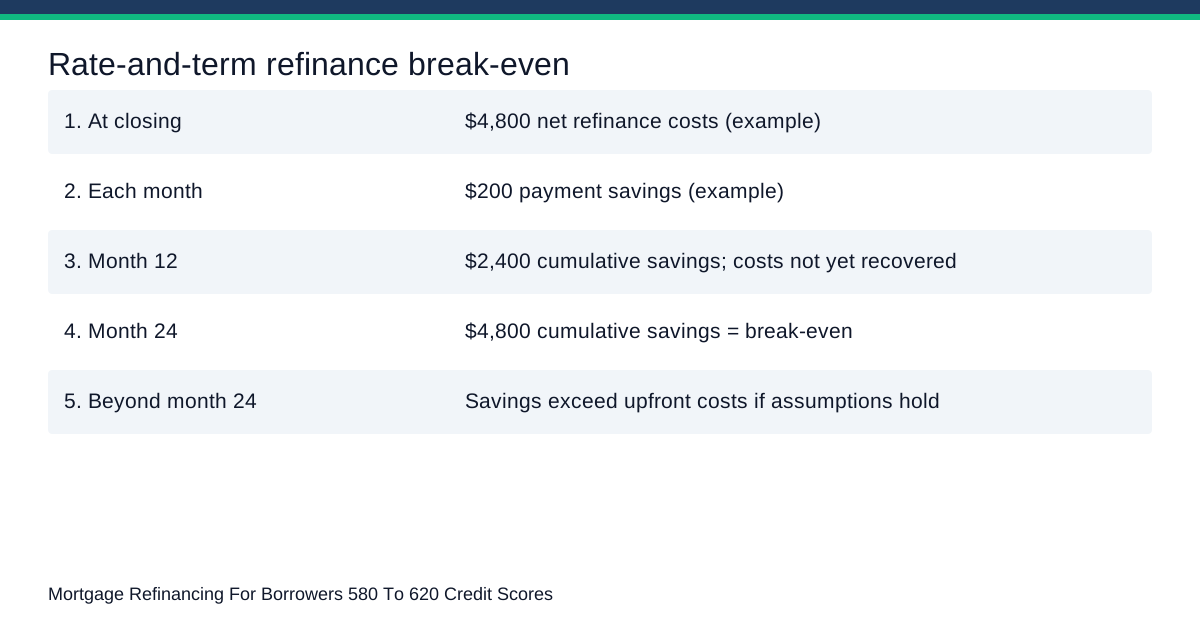
The second option is the VA Cash-Out Refinance, which lets you tap into your home's equity while refinancing. This program converts any mortgage type into a VA loan and allows you to receive cash at closing. While cash-out refinances require more scrutiny than IRRRLs, they remain accessible to veterans with poor credit who have sufficient equity and can demonstrate stable income.
For veterans with credit scores in the 580-620 range, the IRRRL typically offers the smoothest approval process because it focuses primarily on your payment history with your current VA loan rather than your overall credit profile. If you've made on-time mortgage payments for the past 12 months, many lenders will overlook other credit blemishes.
How Credit Score Impacts Your Refinance Options
Your credit score directly affects your interest rate, available lenders, and whether you'll face additional requirements. Veterans with scores from 620-640 generally access standard VA refinance programs with minimal hurdles. Those in the 600-619 range may need to provide extra documentation showing income stability and explaining any derogatory credit marks.
When your score falls into the 580-599 range, you'll need to work with specialized VA lenders who manually underwrite loans rather than relying solely on automated systems. Manual underwriting means a human reviewer examines your complete financial picture—including your income, expenses, assets, and the circumstances behind your credit challenges—rather than making decisions based purely on your credit score.
Specific Credit Requirements You'll Need to Meet
The VA Loan Refinance Requirements for Veterans With Poor Credit include several credit-related standards beyond just your score. First, you'll need to demonstrate a payment history showing responsible financial behavior over the past 12 months. This doesn't mean perfection—one or two late payments might be acceptable if you can explain them—but patterns of habitual lateness will create obstacles.
Bankruptcy and foreclosure also factor into eligibility. If you've experienced a Chapter 7 bankruptcy, most lenders require at least two years since discharge before refinancing. For Chapter 13 bankruptcy, you may refinance after 12 months of on-time plan payments with court approval. Foreclosures typically require a two-year waiting period, though some lenders are more flexible with foreclosures on non-VA properties.
Expert Tip
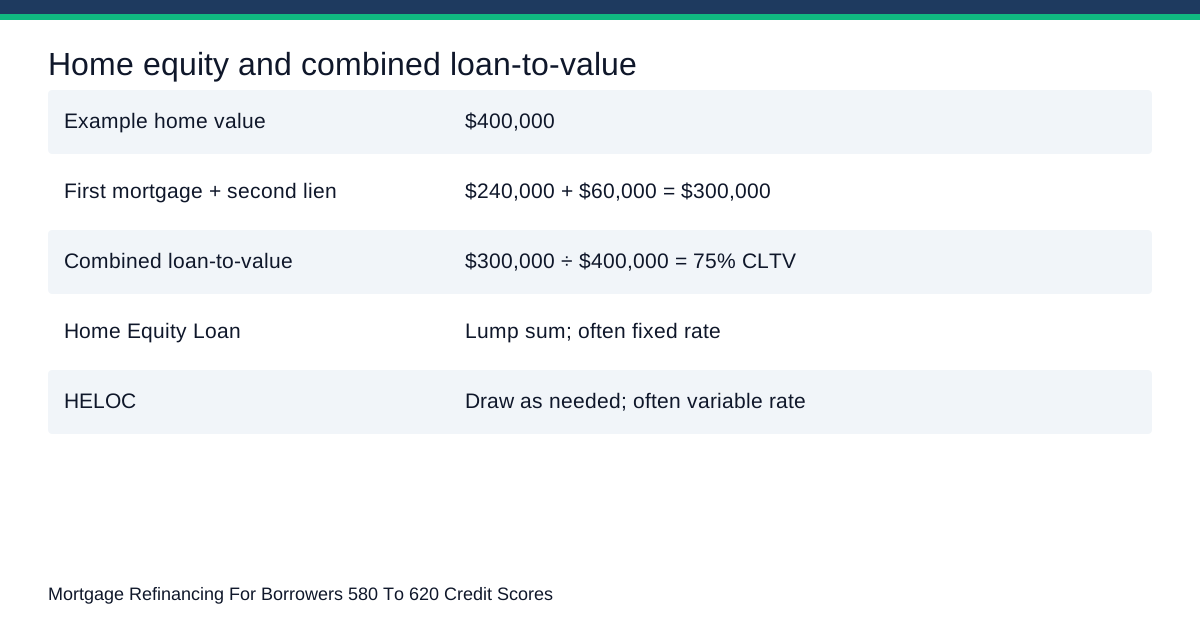
Compare Loan Estimates for the same loan type and term. Include closing costs when calculating whether refinancing saves money.
Collections and charge-offs don't automatically disqualify you, but lenders will examine them closely. You generally don't need to pay off collections before refinancing, but you'll need to explain what happened and demonstrate that your current financial situation is stable. Medical collections are viewed more favorably than credit card or consumer debt collections.
Documentation Requirements for Lower Credit Scores
Veterans with credit scores below 620 should expect to provide comprehensive documentation including:
- Two years of tax returns
- Two months of bank statements for all accounts
- Pay stubs covering the most recent 30-day period
- W-2 forms for the past two years
- Letter of explanation for any credit issues
- Proof of additional income sources (disability payments, pensions, etc.)
- Documentation of any extenuating circumstances that affected your credit
Income and Employment Verification Standards
Beyond credit requirements, lenders evaluate your debt-to-income ratio (DTI) when determining refinance eligibility. Your DTI compares your monthly debt obligations to your gross monthly income. While the VA itself doesn't set maximum DTI limits, most lenders cap DTI at 41% for veterans with credit scores below 620.
Veterans with higher DTIs may still qualify if they have significant residual income—the money left over each month after paying all debts and estimated living expenses. The VA uses residual income tables based on family size and geographic region to ensure you can comfortably afford your mortgage payment. For a family of four, you'll typically need residual income between $1,025 and $1,062 monthly depending on your loan amount.
Employment stability matters significantly when your credit score is borderline. Lenders prefer seeing two years with the same employer or in the same field. If you've changed jobs recently, a promotion or move within the same industry is viewed more favorably than switching career fields entirely. Self-employed veterans need two years of tax returns showing consistent or growing income.
Special Considerations for Disability Income
VA disability compensation provides excellent qualifying income because it's tax-free, non-garnishable, and continues for life. Lenders can "gross up" this income by 25% when calculating your qualifying income, giving it greater weight than taxable income. If you receive $2,000 monthly in disability benefits, lenders treat it as equivalent to $2,500 in taxable income, improving your debt-to-income ratio substantially.
VA Refinance Costs and Fee Structures for 2026
Understanding the costs involved helps you evaluate whether refinancing makes financial sense. Here's a breakdown of typical VA refinance expenses for 2026:
| Fee Category | IRRRL (Streamline) | Cash-Out Refinance |
|---|---|---|
| VA Funding Fee | 0.5% of loan amount | 2.3% of loan amount (first use) or 3.6% (subsequent use) |
| Appraisal | Usually waived | $500-$800 |
| Credit Report | $30-$50 | $30-$50 |
| Title Search & Insurance | $700-$1,200 | $1,000-$2,500 |
| Lender Origination | $0-$1,500 | $0-$2,000 |
| Recording Fees | $50-$250 | $50-$250 |
| Total Estimated Costs | $1,000-$3,500 | $3,000-$7,500 |
Veterans with service-connected disabilities are exempt from the VA funding fee, which can save thousands of dollars. The funding fee can be rolled into your loan amount, meaning you don't need cash at closing, though this increases your overall loan balance and long-term interest costs.
When working with lenders who specialize in poor credit refinancing, you may encounter slightly higher origination fees or interest rates. A veteran with a 605 credit score might receive an interest rate 0.375% to 0.75% higher than someone with a 720 score. On a $250,000 loan, this translates to approximately $50-$125 more in monthly payments.
Step-by-Step Process for Refinancing With Poor Credit
Successfully navigating VA Loan Refinance Requirements for Veterans With Poor Credit requires a strategic approach:
- Check your credit reports from all three bureaus (Experian, Equifax, TransUnion) and dispute any errors. Even correcting small mistakes can boost your score by several points, potentially moving you into a more favorable tier.
- Gather 12 months of mortgage payment history showing you've paid your current VA loan on time. This is your strongest qualification factor when credit scores are borderline.
- Research VA-approved lenders who specialize in lower credit scores rather than applying with mainstream banks that typically require 620+ scores. Specialized lenders understand veteran financial challenges and have more flexible underwriting.
- Prepare your explanation letter detailing any credit issues. Be honest, take responsibility, and explain what changed to prevent future problems. Strong explanation letters can overcome credit objections.
- Calculate your debt-to-income ratio before applying. If it exceeds 41%, pay down debts or explore ways to increase qualifying income before submitting your application.
- Submit applications to 2-3 specialized lenders simultaneously to compare offers. Multiple mortgage inquiries within 45 days count as a single credit pull, minimizing score impact.
- Review your Loan Estimate carefully when received. Compare interest rates, closing costs, and monthly payments across lenders. Don't focus solely on rate—total costs matter more for long-term savings.
- Lock your interest rate once you've selected a lender. Rate locks typically last 30-60 days, protecting you from rate increases during processing.
- Respond promptly to documentation requests from your lender. Delays can cause rate lock expirations, forcing you to accept whatever rates prevail when the lock expires.
- Review your Closing Disclosure at least three days before closing to ensure all terms match your expectations and no unexpected fees have appeared.
Alternative Strategies When Traditional Refinancing Proves Difficult
If you're struggling to qualify for VA refinancing despite meeting basic requirements, several strategies can improve your approval odds. Consider adding a creditworthy co-borrower, such as a spouse with better credit. While the VA will average your credit scores, a spouse with a 680 score can lift a combined average well above the threshold that triggers additional scrutiny.
Waiting 3-6 months while improving your credit profile may yield significantly better terms. During this time, pay down credit card balances below 30% of limits, make all payments on time, and avoid opening new credit accounts. These actions can boost scores by 20-40 points, potentially saving you thousands in interest over your loan's life.
Some veterans benefit from credit counseling services that negotiate with creditors and help establish payment plans. While enrolled in a debt management plan, you can still refinance if you've made at least 12 consecutive on-time plan payments and obtain written permission from the counseling agency.
Working With VA-Savvy Mortgage Professionals
The difference between approval and rejection often comes down to lender expertise with VA loans and borrowers with credit challenges. Generic mortgage brokers who primarily handle conventional loans may not understand VA nuances like residual income calculations or how to properly gross up disability income.
Seek lenders who dedicate significant portions of their business to VA refinancing and explicitly state they work with credit scores below 620. These specialists know which underwriting guidelines offer flexibility and how to structure your application for maximum approval likelihood.
Frequently Asked Questions
While the VA doesn't set a minimum credit score, most lenders require 580-600 for manual underwriting. Some specialized VA lenders will consider scores as low as 550 if you have perfect mortgage payment history for 12 months, strong residual income, and documented explanations for credit issues. The IRRRL program generally has more lenient credit requirements than cash-out refinancing.
Can I do a VA refinance with collections on my credit report?
Yes, unpaid collections don't automatically disqualify you from VA refinancing. Lenders will require explanation letters detailing the circumstances, but you typically don't need to pay collections before closing. Medical collections are viewed most favorably, while recent non-medical collections may require payment arrangements. Total collection amounts exceeding $5,000 receive closer scrutiny.
How long after bankruptcy can veterans refinance with a VA loan?
Veterans can pursue VA refinancing 12-24 months after bankruptcy depending on the chapter filed. Chapter 13 bankruptcy allows refinancing after 12 months of on-time plan payments with court approval. Chapter 7 bankruptcy typically requires 24 months since discharge, though some lenders may consider 12 months with excellent payment history since discharge and strong compensating factors like high income or substantial equity.
Do late mortgage payments prevent VA refinancing for veterans with poor credit?
Late mortgage payments create significant obstacles, especially when credit scores are already below 620. Most lenders require 12 consecutive months of on-time payments on your current VA loan before approving an IRRRL. One late payment 10-12 months ago may be acceptable with a strong explanation, but multiple recent late payments will likely result in denial until you establish a better payment pattern.
What interest rate should veterans with 580-620 credit scores expect when refinancing?
As of 2026, veterans with credit scores in the 580-620 range typically receive VA refinance rates approximately 0.5% to 1.25% higher than veterans with excellent credit. If current VA rates for 740+ scores are 6.25%, expect rates between 6.75% and 7.50%. Your exact rate depends on your specific score, loan-to-value ratio, loan amount, and the lender you choose. Rate shopping among multiple VA specialists can yield variations of 0.25% to 0.5% for the same credit profile.
Take the Next Step Toward VA Refinancing Today
Understanding VA Loan Refinance Requirements for Veterans With Poor Credit is the first step toward better mortgage terms and monthly savings. Your credit challenges don't disqualify you from the benefits you've earned through military service. Specialized VA lenders work with veterans in your exact situation every day, helping them access lower rates and better payment terms despite credit scores in the 580-620 range.
The refinancing landscape constantly evolves, with lenders adjusting their credit requirements and rate offerings based on market conditions. What's difficult to qualify for today may become more accessible in weeks or months, making it essential to work with professionals who monitor these changes and can time your application for optimal results.
Don't let poor credit prevent you from exploring your VA refinancing options. Request a free, no-obligation consultation with a VA loan specialist who works specifically with veterans facing credit challenges. You'll receive a personalized assessment of your refinancing prospects, specific steps to improve your approval odds, and accurate rate quotes based on your unique financial situation. There's no cost to explore your options, and you may discover you're closer to qualifying than you realized. Connect with a VA refinancing expert today and take control of your mortgage future.
Frequently Asked Questions
Can I refinance a VA loan with a credit score below 620?
Yes, veterans with credit scores between 580 and 620 can refinance a VA loan. The IRRRL (Streamline Refinance) is often the easiest option, requiring on-time mortgage payments for the past 12 months rather than a high credit score. Some lenders also offer manual underwriting for lower scores.
What are the credit requirements for a VA cash-out refinance with poor credit?
For a VA cash-out refinance with poor credit, lenders typically require a credit score of at least 580, stable income, sufficient home equity, and a history of on-time payments. You may need to provide extra documentation explaining credit issues, and manual underwriting may be available.
How does a bankruptcy affect VA loan refinance eligibility?
After a Chapter 7 bankruptcy, most VA lenders require a waiting period of two years from the discharge date. Chapter 13 bankruptcy may allow refinancing during the repayment plan if you have made timely payments for at least 12 months and receive court approval. Each case is reviewed individually.
What documentation do I need for a VA refinance with poor credit?
You will need proof of income (pay stubs, tax returns), bank statements, a valid Certificate of Eligibility, and a mortgage payment history showing on-time payments for the past 12 months. For lower credit scores, you may also need a letter explaining derogatory credit events and proof of stable employment.
Key Takeaways
- Understanding your options for va loan refinance requirements for veterans with poor credit is the first step
- Getting pre-qualified helps you understand your real options