Compare Live Mortgage & Home Equity Rates
Compare current APRs, points, fees, and estimated monthly payments from participating lenders below.
Mortgage rates
Subprime Lender Refinance Options for 620 Credit Score Borrowers
Quick Answer: Subprime lender refinance options for 620 credit score borrowers include FHA loans, VA loans (for eligible veterans), and portfolio lender programs. These options typically require a credit score of at least 580-620, but come with higher interest rates and mortgage insurance. Refinancing can help consolidate debt or access equity, but terms are less favorable than conventional loans.
If you're a homeowner with a credit score between 580 and 620, you might think refinancing your mortgage is out of reach. The good news is that Subprime Lender Refinance Options for 620 Credit Score Borrowers do exist, though they come with specific requirements and higher costs than conventional loans. Subprime lenders specialize in working with borrowers who have experienced credit challenges, offering refinance programs through FHA loans, VA loans (for eligible veterans), and specialized portfolio lenders. While you'll typically face higher interest rates—often 1.5% to 3% above prime rates—and may need to provide a larger down payment or accept mortgage insurance, refinancing can still help you consolidate debt, access equity, or secure better terms than your current loan. Understanding your options and preparing your application properly can make the difference between approval and rejection.
Understanding Your Credit Score Position in the Refinance Market
A credit score between 580 and 620 places you in what lenders categorize as the subprime or near-subprime range. This doesn't mean you're shut out of refinancing opportunities, but it does require a more strategic approach. Traditional conventional lenders typically require credit scores of 620 or higher, making that 620 mark a critical threshold.
Understanding subprime lender refinance options for 620 credit score borrowers can help you compare your options and make a confident, informed decision.
The mortgage industry has evolved significantly, and subprime lending today looks vastly different from the pre-2008 financial crisis era. Modern subprime lenders operate under strict regulatory oversight and offer more sustainable loan products. However, they still price their loans to reflect the increased risk they're taking by lending to borrowers with lower credit scores.
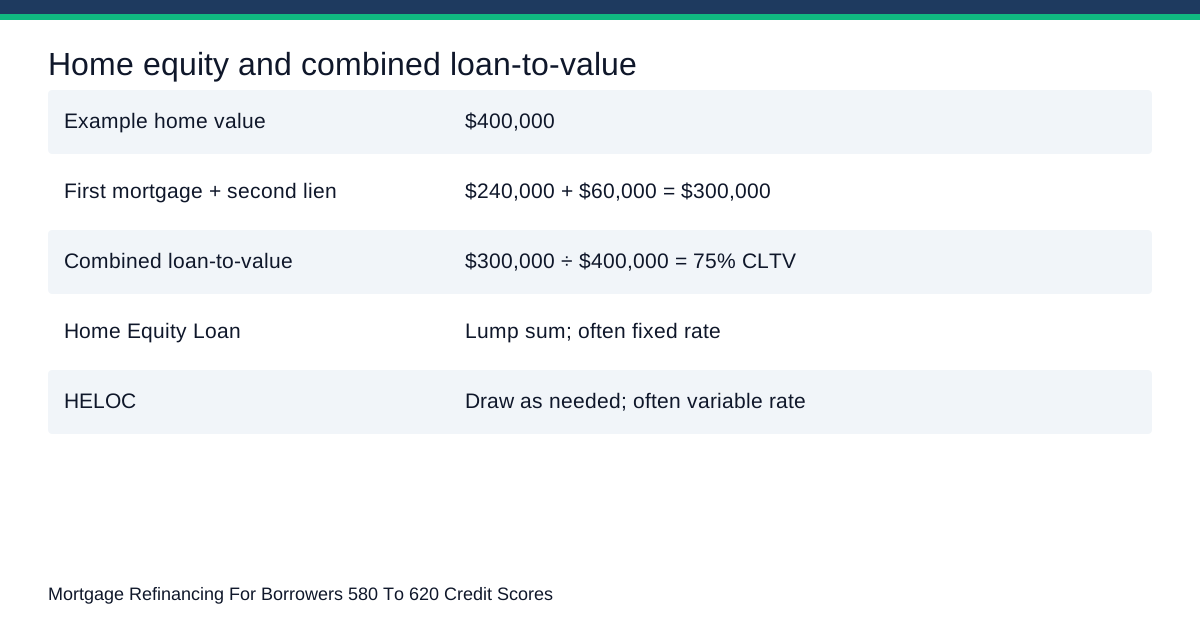
Your credit score impacts three critical refinancing factors: your approval odds, your interest rate, and your loan-to-value (LTV) requirements. Borrowers at 620 may find significantly more options than those at 580, even though the 40-point difference seems small. Many lenders use 620 as a hard cutoff for certain programs, while others will work with scores as low as 580 but with substantially more restrictive terms.
Available Subprime Refinance Program Types
FHA Streamline and Standard Refinance Programs
The Federal Housing Administration backs loans for borrowers with credit scores as low as 580, making FHA refinancing one of the most accessible options for subprime borrowers. If you currently have an FHA loan, the FHA Streamline Refinance program allows you to refinance with minimal documentation and no appraisal in many cases, even with a 580-620 credit score.
For standard FHA refinances (when you're refinancing from a conventional loan to FHA), you'll need at least a 580 credit score for maximum financing, though some lenders set their minimum at 600 or 620. FHA loans require mortgage insurance premiums—both an upfront premium of 1.75% of the loan amount and an annual premium ranging from 0.45% to 1.05% depending on your loan amount and LTV ratio.
VA Interest Rate Reduction Refinance Loans (IRRRL)
Veterans, active-duty service members, and eligible surviving spouses have access to VA refinancing programs that are remarkably forgiving of credit challenges. The VA IRRRL program doesn't have a minimum credit score requirement set by the VA itself, though individual lenders typically require scores of 580-620 or higher.
VA refinances don't require mortgage insurance, which can result in substantial savings compared to FHA options. The VA funding fee for IRRRLs ranges from 0.5% to 3.6% of the loan amount, depending on whether it's your first VA loan and whether you're making a down payment.
Expert Tip
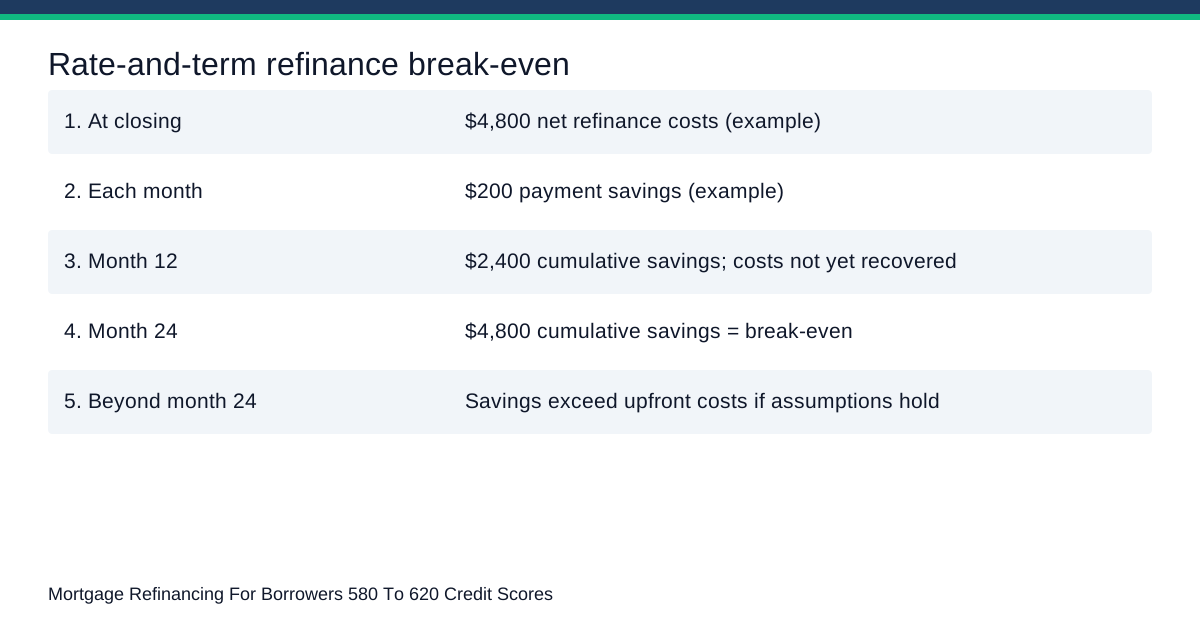
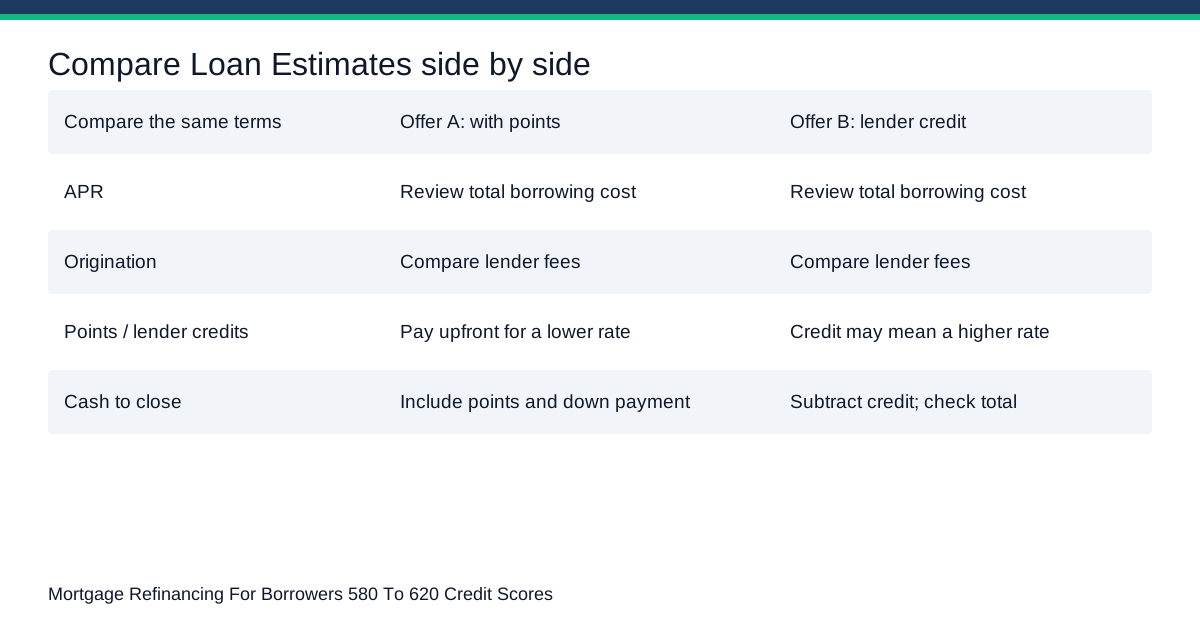
Compare Loan Estimates for the same loan type and term. Include closing costs when calculating whether refinancing saves money.
Portfolio Lenders and Credit Unions
Portfolio lenders keep loans on their own books rather than selling them to the secondary market, giving them flexibility to set their own credit standards. These lenders often work with borrowers in the 580-620 range, particularly if you have strong compensating factors like stable employment, significant equity, or low debt-to-income ratios.
Credit unions frequently offer more personalized underwriting and may approve borrowers who don't meet traditional lending criteria. Membership requirements vary, but many credit unions have broad eligibility criteria based on geography, employer, or family connections.
Non-QM (Non-Qualified Mortgage) Lenders
Non-QM lenders offer refinance products that fall outside standard qualified mortgage rules. These loans often focus more on your assets, bank statements, or current income rather than traditional employment verification and credit scores. While they can work with lower credit scores, they typically charge interest rates 2-4% higher than conventional loans and may require substantial equity in your property.
Cost Breakdown: What to Expect When Refinancing with Subprime Credit
| Cost Component | Typical Range (2026) | Details |
|---|---|---|
| Interest Rate Premium | 1.5% - 3.5% above prime | Varies by score within 580-620 range |
| Origination Fees | 0.5% - 2% of loan amount | $1,500 - $6,000 on $300k loan |
| Appraisal | $450 - $750 | Required for most programs |
| Credit Report | $30 - $100 | Tri-merge report standard |
| Title Insurance | $1,000 - $3,000 | Varies by loan amount and state |
| Recording Fees | $100 - $500 | Government charges |
| Mortgage Insurance (FHA) | 0.45% - 1.05% annually | Continues for loan life on loans over 90% LTV |
| Upfront MIP (FHA) | 1.75% of loan amount | Can be rolled into loan |
| Total Closing Costs | 3% - 6% of loan amount | $9,000 - $18,000 on $300k loan |
For a borrower refinancing a $300,000 mortgage with a 600 credit score, you might expect total costs between $10,000 and $18,000 when factoring in all fees and premiums. Interest rates as of 2026 for subprime borrowers typically range from 7.5% to 10.5%, depending on the specific program and your compensating factors.
Improving Your Approval Odds: Strategic Steps Before Applying
Address Credit Report Errors and Collections
Before applying for refinancing, obtain your credit reports from all three bureaus and dispute any errors. Even small corrections can potentially push you above critical thresholds. If you have collections or charge-offs, consider whether paying them will help or hurt—sometimes paying old collections can temporarily lower your score as the account is updated with recent activity.
For accounts approaching the seven-year reporting limit, it may be strategic to wait rather than taking action that resets the clock. Consult with a credit counselor or mortgage professional before making payments on very old debts.
Reduce Your Debt-to-Income Ratio
Your debt-to-income (DTI) ratio becomes even more critical when your credit score is marginal. Most subprime lenders want to see DTI ratios below 45-50%, though some may go higher with strong compensating factors. Paying down credit cards, eliminating small loans, or increasing your income can all improve your DTI.
Even if you can't pay off debts entirely, reducing credit card balances below 30% of their limits can boost your credit score within weeks. This double benefit—improving both credit score and DTI—makes debt reduction one of the most effective strategies before applying.
Build Your Cash Reserves
Demonstrating 3-6 months of mortgage payments in reserve can significantly strengthen your application. Lenders view cash reserves as a buffer against financial shocks and evidence of responsible financial management. Some subprime lenders will approve borrowers with lower credit scores if they show substantial reserves.
Document Compensating Factors
Prepare documentation that tells your credit story. If your score suffered due to medical bills, divorce, or temporary job loss—but you've since stabilized—write a letter of explanation and provide supporting documentation. Subprime lenders use manual underwriting more frequently than prime lenders, meaning a human will review your complete financial picture rather than relying solely on automated decisions.
The Application and Approval Process for Subprime Refinancing
Step 1: Pre-qualification Assessment (Week 1) Contact multiple subprime-friendly lenders to discuss your situation. Be honest about your credit score and financial history. Lenders will provide preliminary rate quotes and program options without pulling your credit initially.
Step 2: Formal Application and Credit Pull (Week 1-2) Once you've selected a lender, complete the formal application. Multiple credit inquiries for mortgage purposes within a 14-45 day window count as a single inquiry, so don't worry about rate shopping hurting your score during this period.
Step 3: Documentation Submission (Week 2-3) Gather required documents including two years of tax returns, recent pay stubs, bank statements, and explanations for any credit issues. Subprime applications typically require more documentation than conventional loans.
Step 4: Appraisal and Underwriting (Week 3-5) The lender orders an appraisal to determine your home's value and loan-to-value ratio. Simultaneously, underwriters review your complete financial profile. Be prepared for additional documentation requests during this phase.
Step 5: Conditional Approval and Final Verification (Week 5-6) You'll likely receive a conditional approval requiring you to satisfy specific requirements—paying down a debt, explaining a deposit, or providing additional documentation.
Step 6: Clear to Close and Funding (Week 6-8) Once all conditions are met, you'll receive final approval and schedule your closing. The entire process typically takes 45-60 days for subprime refinances, longer than conventional refinances due to additional underwriting scrutiny.
Red Flags to Avoid: Protecting Yourself from Predatory Lending
While legitimate subprime lenders serve an important market need, predatory lenders also target borrowers with credit challenges. Watch for these warning signs:
Excessive Fees: While subprime loans cost more, origination fees above 3% or junk fees for vague services indicate potential predatory practices.
Pressure Tactics: Legitimate lenders give you time to review documents and compare offers. High-pressure sales tactics and rushed timelines are red flags.
Prepayment Penalties: Most modern subprime loans don't include prepayment penalties. If your loan includes steep penalties for paying off or refinancing within the first several years, be cautious.
Balloon Payments: Avoid loans requiring large lump-sum payments after a few years unless you have a clear strategy for handling that payment.
Steering Without Explanation: If a lender pushes you toward a particular product without explaining why it's better than alternatives, seek a second opinion.
Always verify that your lender is properly licensed, read reviews from other borrowers, and don't let anyone pressure you into signing documents you don't fully understand. The National Foundation for Credit Counseling offers free consultations to review loan offers if you're unsure.
Long-Term Strategy: Refinancing Your Refinance
For many subprime borrowers, the initial refinance isn't the end goal—it's a stepping stone. Your strategy should include a plan to improve your credit and refinance again into better terms within 2-3 years.
After completing your subprime refinance, focus on:
- Making every mortgage payment on time (payment history is 35% of your credit score)
- Paying down credit card balances below 30% utilization
- Avoiding new credit applications unless absolutely necessary
- Letting negative marks age off your report naturally
- Building emergency savings to prevent future credit damage
Frequently Asked Questions
Most subprime lenders will consider refinance applications with credit scores as low as 580, particularly for FHA and VA programs. However, scores of 600 or above open significantly more options and better terms. Borrowers below 580 typically can't qualify for mainstream refinancing programs and may need to focus on credit improvement before applying.
How much higher are interest rates for borrowers with 580-620 credit scores?
Subprime borrowers typically pay interest rates 1.5% to 3.5% higher than prime borrowers. In 2026, while prime borrowers might secure rates around 6.5-7%, subprime borrowers often see rates between 8% and 10.5%. The exact premium depends on your specific score within the range, loan-to-value ratio, debt-to-income ratio, and other compensating factors.
Can I refinance with a 620 credit score if I have recent late payments?
Recent late payments make refinancing more challenging but not impossible. FHA guidelines require 12 months of on-time housing payments before refinancing. Some lenders may overlook a single late payment from over 12 months ago, but patterns of recent delinquency typically result in denial. Focus on establishing 12-24 months of perfect payment history before applying.
Do subprime refinance lenders require higher down payments or more equity?
Yes, most subprime lenders require lower loan-to-value ratios than conventional lenders. While prime borrowers might refinance up to 97% of their home's value, subprime borrowers typically need at least 10-20% equity. FHA streamline refinances may offer exceptions if you're already in an FHA loan, potentially allowing refinancing with minimal equity requirements.
How long after bankruptcy or foreclosure can I refinance with subprime lenders?
FHA refinancing becomes possible just two years after Chapter 13 bankruptcy discharge and three years after Chapter 7 or foreclosure, provided you've re-established good credit. Conventional loans typically require 4-7 years. VA loans may be available two years after Chapter 7 discharge. Some portfolio lenders may work with borrowers sooner if you have strong compensating factors and can explain the circumstances.
Take the Next Step Toward Better Mortgage Terms
Understanding Subprime Lender Refinance Options for 620 Credit Score Borrowers is just the beginning. Every borrower's situation is unique, and the right refinancing strategy depends on your specific credit profile, financial goals, and home equity position.
Don't let a credit score between 580 and 620 prevent you from exploring refinancing options that could lower your monthly payments, consolidate high-interest debt, or help you access your home's equity. Specialized subprime lenders evaluate your complete financial picture—not just your credit score.
Request your free, no-obligation refinancing consultation today. Our network of subprime-friendly lenders specializes in helping borrowers with credit challenges find realistic refinancing solutions. Within 24 hours, you'll receive personalized rate quotes and program recommendations based on your unique situation. There's no impact to your credit score for the initial consultation, and you're under no obligation to proceed.
Complete our brief questionnaire now to connect with lenders who understand that your credit score doesn't tell your whole story. Better mortgage terms may be closer than you think.
Frequently Asked Questions
What credit score do I need for a subprime refinance?
Most subprime lenders require a minimum credit score of 580 for FHA loans, though some set their minimum at 600 or 620. VA loans have no official minimum, but individual lenders often require 580-620. Borrowers at 620 may have more options than those at 580.
Are there refinance options for borrowers with a 580 credit score?
Yes, FHA loans are available for borrowers with credit scores as low as 580, though terms are more restrictive. VA loans may also be an option for eligible veterans. Expect higher interest rates and mortgage insurance requirements.
What is the difference between FHA Streamline and standard FHA refinance?
FHA Streamline is for existing FHA loans and requires minimal documentation, often no appraisal, and is available with scores as low as 580. Standard FHA refinance is for converting a conventional loan to FHA and typically requires a 580-620 credit score.
Do VA refinance loans require mortgage insurance?
No, VA refinance loans do not require mortgage insurance, which can lower monthly payments. However, they may have a funding fee. Credit score requirements are set by individual lenders, often 580-620.
Key Takeaways
- Understanding your options for subprime lender refinance options for 620 credit score borrowers is the first step
- Getting pre-qualified helps you understand your real options