Compare Live Mortgage & Home Equity Rates
Compare current APRs, points, fees, and estimated monthly payments from participating lenders below.
Mortgage rates
Refinancing Manufactured Home With 580 to 620 Credit Score Guide
Quick Answer: Yes, refinancing a manufactured home with a credit score between 580 and 620 is possible through specialized lenders offering FHA Title I loans or chattel loans. Qualification depends on factors like property classification, payment history, and debt-to-income ratio. Expect higher interest rates than prime borrowers, but consistent payments can improve your chances.
If you're searching for information on Refinancing Manufactured Home With 580 to 620 Credit Score Guide, you've come to the right place. While traditional refinancing can be challenging for borrowers in the 580-620 credit score range, manufactured home refinancing is absolutely possible with the right approach. Specialized lenders offer programs specifically designed for borrowers with fair credit who own manufactured or mobile homes. This guide will walk you through your options, qualification requirements, expected costs, and actionable steps to successfully refinance your manufactured home even with a credit score between 580 and 620.
Understanding Manufactured Home Refinancing with Fair Credit
Manufactured home refinancing works differently than traditional site-built home refinancing, especially when your credit score falls in the fair credit range. Lenders view manufactured homes as higher risk than conventional properties, and combining this with a 580-620 credit score creates unique challenges—but not insurmountable ones.
When considering refinancing manufactured home with 580 to 620 credit score guide, you should understand all available options.
The key difference lies in how lenders classify your property. If your manufactured home is permanently affixed to land you own and has been converted to real property with the title, you'll have access to more refinancing options. If it's still classified as personal property or sits on leased land, you'll need to work with specialized lenders who understand this market segment.
Why Credit Score Matters for Manufactured Home Refinancing
Your credit score between 580 and 620 places you in what lenders call the "subprime" or "non-prime" category. This means you'll face higher interest rates than borrowers with scores above 680, but you're still eligible for legitimate refinancing programs. The difference between a 580 score and a 620 score can be significant—potentially 0.5% to 1.5% in interest rate differences—so every point matters.
Lenders will also examine your payment history on your current manufactured home loan, your debt-to-income ratio, and your employment stability. If you've made consistent on-time payments for the past 12-24 months, even with a lower credit score, many specialized lenders will view your application favorably.
Types of Refinancing Options Available
FHA Title I Loan Refinancing
The FHA Title I program is one of the most accessible options for manufactured home owners with credit scores as low as 580. This program specifically serves manufactured homes and requires only a 3.5% down payment for purchases (or equivalent equity for refinancing). Interest rates typically range from 7.5% to 10.5% as of 2026, depending on your specific credit profile within the 580-620 range.
Title I loans have maximum loan amounts of $69,678 for a single-wide manufactured home and up to $92,904 for a double-wide or larger unit. These amounts are subject to periodic adjustments, so always verify current limits with your lender.
Chattel Loans
Chattel loans treat your manufactured home as personal property rather than real estate. While these typically carry higher interest rates (8% to 13% in 2026 for fair credit borrowers), they're often easier to qualify for when you have a credit score between 580 and 620. Chattel refinancing works well if your home sits on leased land or hasn't been converted to real property.
Expert Tip
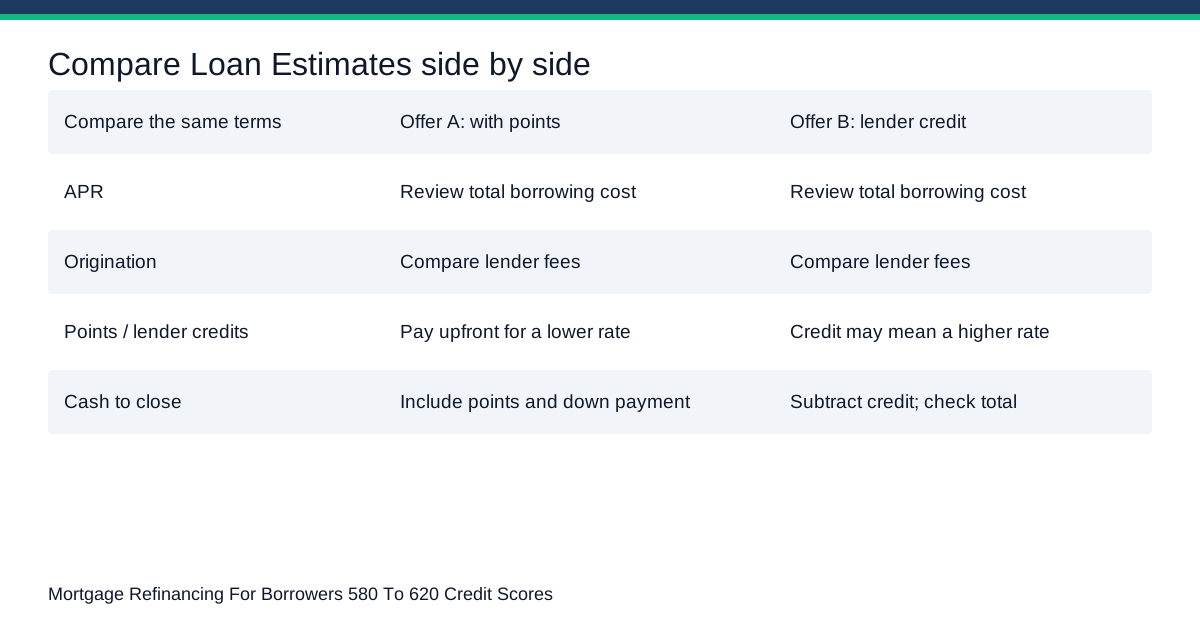
Compare Loan Estimates for the same loan type and term. Include closing costs when calculating whether refinancing saves money.
These loans generally have terms of 15 to 25 years and don't require the extensive property appraisals that traditional mortgages demand.
Conventional Refinancing for Permanent Foundations
If your manufactured home is on a permanent foundation and classified as real property, some conventional lenders will refinance your loan with a 620 credit score. At 580-619, you'll likely need to work with portfolio lenders or credit unions that hold loans in-house rather than selling them to Fannie Mae or Freddie Mac.
Expect interest rates between 7% and 11% depending on your exact credit score, loan-to-value ratio, and other qualifying factors.
Step-by-Step Refinancing Process
Following this proven process will maximize your chances of approval and help you secure the best possible terms for your situation:
- Check Your Credit Reports - Obtain free copies from all three bureaus and dispute any errors. Even a 10-20 point increase can improve your rates significantly.
- Determine Your Home's Classification - Verify whether your manufactured home is titled as real property or personal property, and whether it's on owned land or leased land.
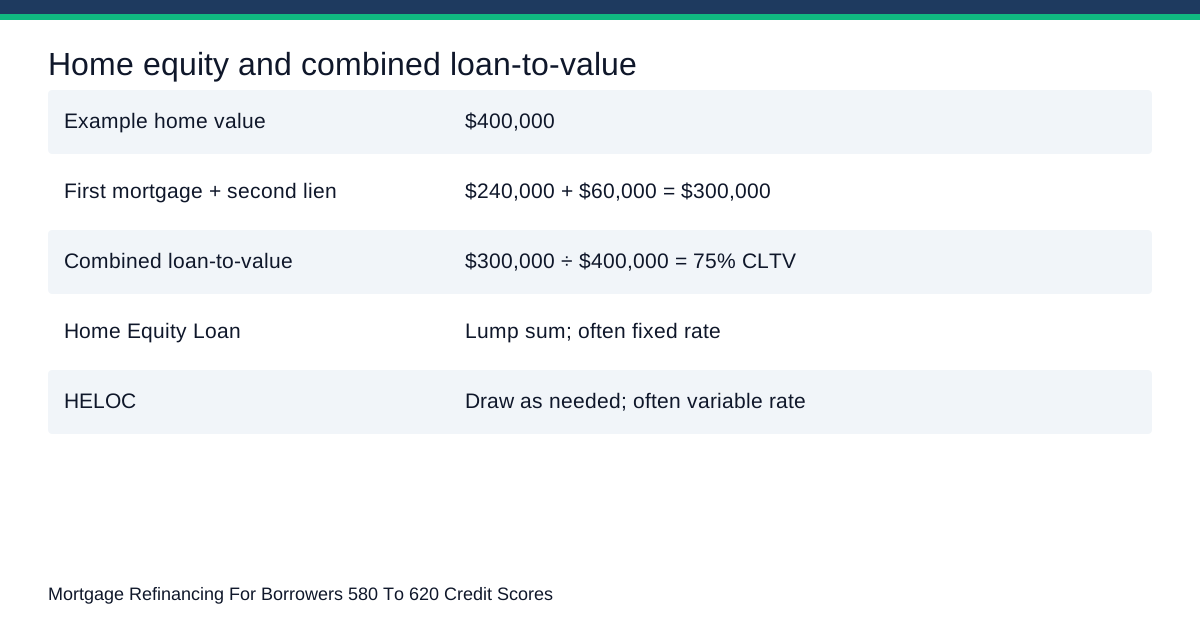
- Calculate Your Current Equity - Most lenders require at least 5-10% equity for refinancing, though some programs allow higher loan-to-value ratios for borrowers improving their loan terms.
- Gather Financial Documentation - Prepare 2 years of tax returns, 2-3 months of pay stubs, 2-3 months of bank statements, current mortgage statement, and homeowner's insurance information.
- Get Pre-Qualified with Multiple Lenders - Contact at least 3-5 specialized manufactured home lenders to compare rates and terms. Pre-qualification doesn't impact your credit score significantly.
- Submit Formal Applications - Choose your top 2-3 lenders and submit complete applications within a 14-day window to minimize credit score impact.
- Complete Home Inspection and Appraisal - The lender will order an inspection and appraisal to verify your home's condition and value.
- Review Loan Estimates - Carefully compare the Loan Estimates from each lender, paying attention to interest rates, closing costs, and monthly payments.
- Lock Your Interest Rate - Once you select a lender, lock your rate to protect against market increases during processing.
- Close on Your Refinance - Review final documents, sign closing paperwork, and pay closing costs. Your new loan pays off the old one, and you begin making payments under the new terms.
Expected Costs and Rate Ranges
Understanding the financial aspects of refinancing helps you evaluate whether refinancing makes sense for your situation.
| Cost Category | Typical Range (2026) | Notes |
|---|---|---|
| Interest Rate (580-599 credit) | 8.5% - 11.5% | Varies by lender and loan type |
| Interest Rate (600-620 credit) | 7.5% - 10.0% | Improvement of 1-1.5% possible |
| Origination Fee | $1,200 - $3,500 | Usually 1-3% of loan amount |
| Appraisal/Inspection | $400 - $800 | Required for most loan types |
| Title Search/Insurance | $500 - $1,200 | For real property classifications |
| Credit Report Fee | $25 - $75 | May cover spouse as well |
| Recording Fees | $75 - $300 | County-dependent |
| Total Closing Costs | $2,500 - $6,500 | Typically 2-5% of loan amount |
When Refinancing Makes Financial Sense
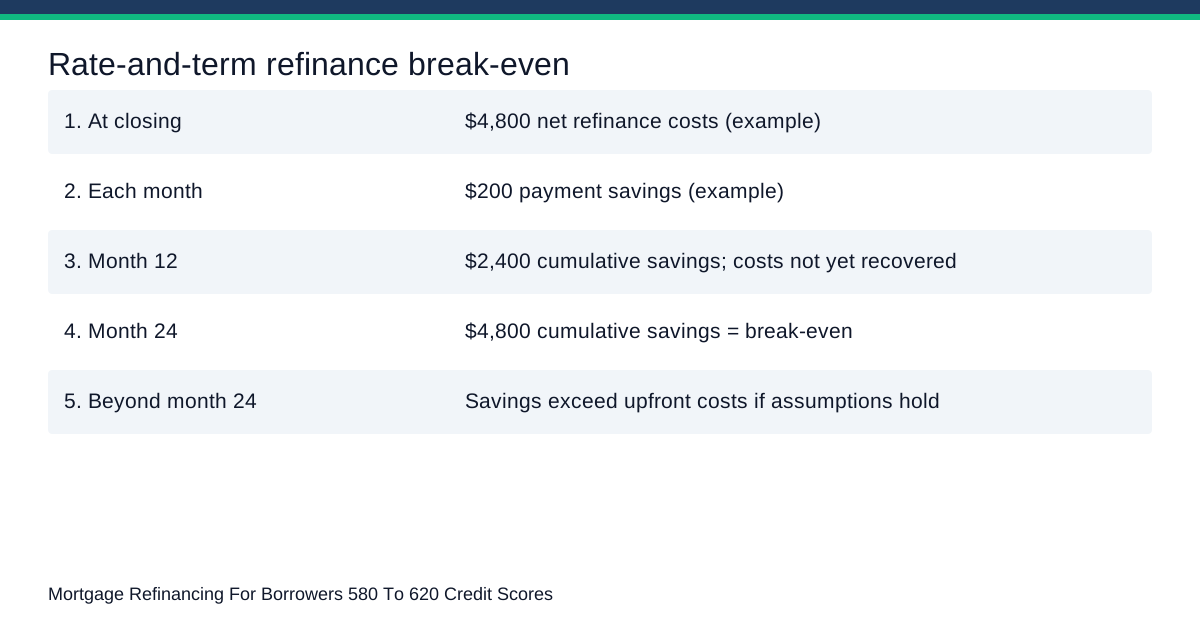
Calculate your break-even point by dividing total closing costs by monthly payment savings. If you plan to keep your manufactured home longer than this break-even period, refinancing likely benefits you. For borrowers with 580-620 credit scores, you should typically see at least a 1% rate reduction to justify refinancing costs.
Improving Your Approval Chances
Boost Your Credit Score Before Applying
Even modest credit improvements can expand your options. Pay down credit card balances to below 30% of limits, make all payments on time for at least six months before applying, and avoid opening new credit accounts in the 6-12 months before refinancing.
Consider a Co-Borrower
Adding a co-borrower with stronger credit can dramatically improve your interest rate and approval odds. This person becomes equally responsible for the loan but can help you qualify for conventional financing rather than subprime programs.
Document Income Stability
Lenders value steady employment. If you've been with your current employer for at least two years, highlight this stability in your application. Self-employed borrowers should be prepared to provide additional documentation showing consistent income.
Save for Higher Down Payment or Closing Costs
If you're refinancing to cash out equity, consider taking less cash to maintain a lower loan-to-value ratio. If you're doing a rate-and-term refinance, bringing cash to closing to reduce your principal can improve your terms.
Red Flags and Predatory Lending Warning Signs
Borrowers with 580-620 credit scores are unfortunately targets for predatory lenders. Watch for these warning signs:
- Pressure to act immediately without time to review documents
- Requests for large upfront fees before loan approval
- Interest rates more than 3-4 percentage points above rates you've seen from reputable lenders
- Balloon payments that require full repayment after just a few years
- Prepayment penalties exceeding 2% or lasting longer than 3 years
- Lenders who discourage you from shopping around or comparing offers
- Requirement to purchase overpriced insurance products as a condition of approval
Frequently Asked Questions
A: Yes, you can refinance a manufactured home on leased land with a 580 credit score through chattel refinancing or specialized manufactured home lenders. FHA Title I loans are available for this situation, though interest rates will be higher than for homes on owned land. Expect rates between 8.5% and 11% depending on your complete financial profile. Make sure your land lease has sufficient remaining term—most lenders require at least 3 years beyond your loan term.
Q: How much can I expect my interest rate to be with a 600 credit score for manufactured home refinancing in 2026?
A: With a 600 credit score, expect manufactured home refinancing rates between 7.5% and 10% in 2026, depending on loan type, loan-to-value ratio, and whether your home is classified as real or personal property. Real property on owned land typically qualifies for rates on the lower end of this range, while chattel loans for homes on leased land fall toward the higher end. Your actual rate also depends on debt-to-income ratio and payment history.
Q: What's the minimum equity required to refinance a manufactured home with fair credit?
A: Most manufactured home refinancing programs require 5-15% equity for borrowers with 580-620 credit scores. FHA Title I loans may allow refinancing with as little as 5% equity, while conventional lenders typically require 10-20% for fair credit borrowers. Some lenders offer higher loan-to-value programs specifically for rate-and-term refinances where you're lowering your interest rate without taking cash out, potentially allowing refinancing with just 5% equity.
Q: How long does the manufactured home refinancing process take with a credit score in the 580-620 range?
A: The complete refinancing process typically takes 30-60 days from application to closing for borrowers with 580-620 credit scores. Fair credit applications sometimes require additional documentation or underwriting review, which can extend timelines. Chattel loan refinancing may process slightly faster (25-45 days) than conventional refinancing for manufactured homes classified as real property (35-60 days). Having all documentation organized and responding quickly to lender requests helps minimize delays.
Q: Will refinancing my manufactured home with fair credit hurt my credit score further?
A: The refinancing process will cause a small temporary decrease in your credit score, typically 5-15 points, due to credit inquiries and the new loan account. However, this impact is minimal if you complete all rate shopping within a 14-day window, as credit bureaus count multiple mortgage inquiries in this period as a single inquiry. Within 6-12 months of on-time payments on your new loan, most borrowers see their scores return to or exceed pre-refinancing levels. The long-term credit benefit of lower payments and improved debt-to-income ratio often outweighs the short-term score dip.
Take the Next Step Toward Refinancing Your Manufactured Home
You now have the essential information covered in this Refinancing Manufactured Home With 580 to 620 Credit Score Guide. While the path to refinancing with fair credit requires more preparation than it would with excellent credit, thousands of manufactured home owners in your situation successfully refinance every year.
The difference between remaining in your current loan and securing better terms can mean thousands of dollars in savings and improved financial flexibility. Whether you're looking to lower your monthly payment, reduce your interest rate, or access equity for home improvements or debt consolidation, specialized lenders are ready to work with you.
Don't let your credit score discourage you from exploring your options. The manufactured home lending landscape has evolved significantly, with more programs available for fair credit borrowers than ever before.
Ready to see what refinancing rates and terms you qualify for? Request your free, no-obligation refinancing consultation today. Our network of specialized manufactured home lenders will review your situation and provide personalized quotes based on your credit profile, home classification, and financial goals. There's no cost to explore your options, and you'll have clear answers within 24-48 hours. Complete the simple form or call to connect with a manufactured home refinancing specialist who understands the unique challenges and opportunities for borrowers with 580-620 credit scores.
Frequently Asked Questions
What are the credit score requirements for refinancing a manufactured home?
Many lenders require a minimum credit score of 580 for FHA Title I loans, while chattel lenders may accept scores as low as 580 to 620. However, individual lender requirements vary, and a higher score within that range can improve your options and rates.
Can I refinance a manufactured home on leased land with a 580 credit score?
Yes, you can refinance a manufactured home on leased land using a chattel loan, which treats the home as personal property. These loans are designed for homes not on owned land and may have higher interest rates but are accessible to borrowers with credit scores in the 580-620 range.
What is the difference between FHA Title I and chattel loans for manufactured home refinancing?
FHA Title I loans are for manufactured homes classified as real property, offering lower rates and longer terms. Chattel loans treat the home as personal property, often used for homes on leased land, with higher rates but easier qualification for fair credit borrowers.
How can I improve my chances of qualifying for manufactured home refinancing with a 580 credit score?
To improve your chances, maintain a stable income, keep your debt-to-income ratio low, and make consistent on-time payments on your current loan for at least 12 months. Also, consider converting your home to real property if possible, as this opens up more loan options.
Key Takeaways
- Understanding your options for refinancing manufactured home with 580 to 620 credit score guide is the first step
- Getting pre-qualified helps you understand your real options