Compare Live Mortgage & Home Equity Rates
Compare current APRs, points, fees, and estimated monthly payments from participating lenders below.
Mortgage rates
Refinancing Jumbo Loan With Poor Credit Is It Possible? Your Complete Guide for 2026
Quick Answer: Yes, refinancing a jumbo loan with poor credit is possible, especially for borrowers with credit scores between 580 and 620. Options include portfolio lenders, private mortgage companies, and hard money loans, though you'll likely face higher interest rates, larger down payment requirements, and stricter equity and reserve demands compared to conventional refinancing.
If you're wondering whether refinancing jumbo loan with poor credit is it possible, the answer is yes—but it requires understanding specialized loan programs, alternative lenders, and strategies designed specifically for borrowers with credit scores between 580 and 620. While traditional jumbo loan refinancing typically demands credit scores of 700 or higher, several pathways exist for borrowers with challenged credit who hold large mortgage balances exceeding conforming loan limits ($806,500 in 2026 for most areas). This guide explains exactly how to navigate refinancing jumbo loan with poor credit is it possible scenarios, what to expect in costs, and which programs might accept your application.
Understanding Jumbo Loans and Credit Score Requirements
Jumbo loans represent mortgage amounts that exceed the conforming loan limits set by federal housing finance agencies. These larger loans carry inherent risks for lenders, which traditionally translates to stricter qualification requirements—including robust credit scores, substantial documentation, and significant cash reserves.
Conventional jumbo loan refinancing typically requires:
- Credit scores of 700-740 or higher
- Debt-to-income ratios below 43%
- Six to twelve months of cash reserves
- Loan-to-value ratios of 80% or less
- Comprehensive income documentation
Why Traditional Lenders Avoid Poor Credit Jumbo Refinancing
Banks and conventional mortgage companies view the combination of poor credit and large loan amounts as compounding risks. A borrower with a 590 credit score seeking to refinance a $950,000 mortgage presents statistical default risks that most traditional underwriting models won't approve. This reality has created a specialized market segment where portfolio lenders, private mortgage companies, and alternative financing options operate.
Your Refinancing Options With Credit Scores Between 580-620
Portfolio Lenders and Private Mortgage Companies
Portfolio lenders keep loans on their own books rather than selling them to government-sponsored entities. This business model allows them greater flexibility in underwriting standards. Many portfolio lenders will consider jumbo refinancing for borrowers with credit scores as low as 580, provided you demonstrate:
- Significant equity in your property (typically 30-40% or more)
- Reasonable explanations for credit challenges
- Stable income history
- Substantial liquid reserves (often 12-24 months of payments)
- Interest rates: 2.5-4.5 percentage points above conforming rates
- Origination fees: 1.5-3% of loan amount
- Higher appraisal costs: $800-$1,500 for jumbo properties
- Potential prepayment penalties: Variable terms
Hard Money and Bridge Loan Refinancing
For borrowers who need immediate refinancing solutions, hard money or bridge loans provide short-term options. These loans emphasize property equity over credit scores, making them accessible even with scores in the 580-620 range.
Typical terms include:
- Loan-to-value ratios: 50-70% maximum
- Interest rates: 8-15% annually
- Terms: 6-36 months
- Points: 2-6 points upfront
- Total costs: $15,000-$60,000 for a $1 million refinance
Credit Union and Community Bank Programs
Certain credit unions and community banks maintain portfolio lending programs with more flexible credit requirements. While not all offer jumbo products, those that do may consider:
Expert Tip
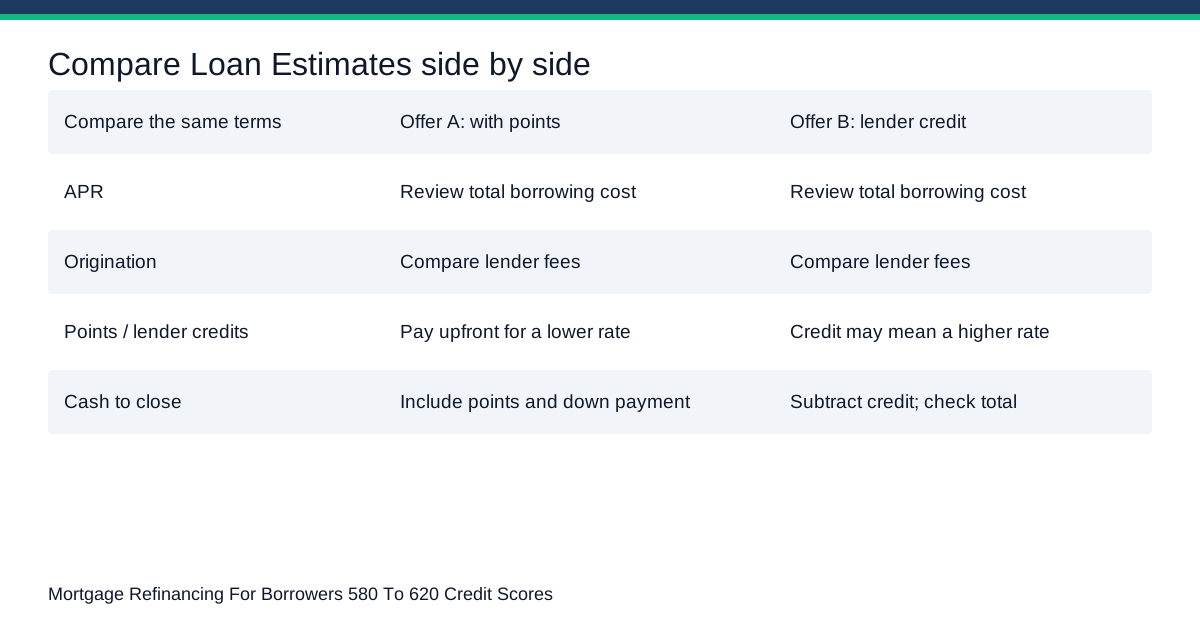
Compare Loan Estimates for the same loan type and term. Include closing costs when calculating whether refinancing saves money.
- Relationship banking history (existing accounts, deposits)
- Overall financial picture beyond credit scores
- Compensating factors like high income or substantial assets
- Local market knowledge and property values
The Complete Refinancing Process for Poor Credit Jumbo Borrowers
Successfully refinancing a jumbo loan with poor credit requires strategic preparation and realistic expectations. Follow this step-by-step approach:
Step 1: Document Your Financial Situation Thoroughly
Gather 24 months of bank statements, tax returns, pay stubs, investment account statements, and documentation of all assets. Lenders compensating for credit risk will scrutinize your complete financial picture.
Step 2: Obtain Your Credit Reports and Scores
Pull reports from all three bureaus and identify any errors or inaccuracies. Dispute legitimate errors immediately, as even small score improvements matter significantly in the 580-620 range.
Step 3: Prepare Explanation Letters
Draft clear, concise letters explaining credit challenges—medical emergencies, divorce, job loss, or other documented hardships. Lenders want to see that past issues were situational rather than ongoing patterns.
Step 4: Calculate Your Available Equity
Order a preliminary property valuation or broker price opinion to establish current market value. Your equity position directly impacts approval likelihood and loan terms.
Step 5: Research Specialized Lenders
Compile a list of 5-10 portfolio lenders, private mortgage companies, and alternative financing sources that specifically advertise flexible jumbo programs. Avoid multiple credit inquiries by pre-qualifying before formal applications.
Step 6: Compare Complete Cost Structures
Request detailed fee worksheets from multiple lenders. Compare not just interest rates but all costs including:
- Origination and underwriting fees
- Appraisal and inspection costs
- Title insurance and escrow fees
- Rate lock fees
- Prepayment penalty terms
Consider adding a creditworthy co-borrower, offering additional collateral, increasing your down payment through equity, or agreeing to higher cash reserve requirements.
Step 8: Complete Underwriting and Close
Expect extended underwriting timelines (60-90 days) compared to conventional refinancing. Respond promptly to all documentation requests and maintain financial stability throughout the process.
Cost Comparison: What to Expect in 2026
Understanding total refinancing costs helps you evaluate whether proceeding makes financial sense. Here's a comprehensive comparison for a $1,000,000 jumbo refinance:
| Cost Category | Traditional Lender (700+ Score) | Portfolio Lender (580-620 Score) | Hard Money Option |
|---|---|---|---|
| Interest Rate | 6.75% - 7.25% | 9.25% - 11.75% | 10% - 15% |
| Origination Fee | $5,000 - $10,000 | $15,000 - $30,000 | $20,000 - $60,000 |
| Appraisal | $600 - $800 | $800 - $1,500 | $800 - $1,500 |
| Title/Escrow | $3,000 - $5,000 | $3,500 - $6,000 | $4,000 - $7,000 |
| Processing Fees | $800 - $1,200 | $1,500 - $2,500 | $2,000 - $3,500 |
| Total Closing Costs | $9,400 - $17,000 | $20,800 - $40,000 | $26,800 - $72,000 |
| Monthly Payment (30-yr) | $6,490 - $6,820 | $8,405 - $10,070 | $8,778 - $12,644 |
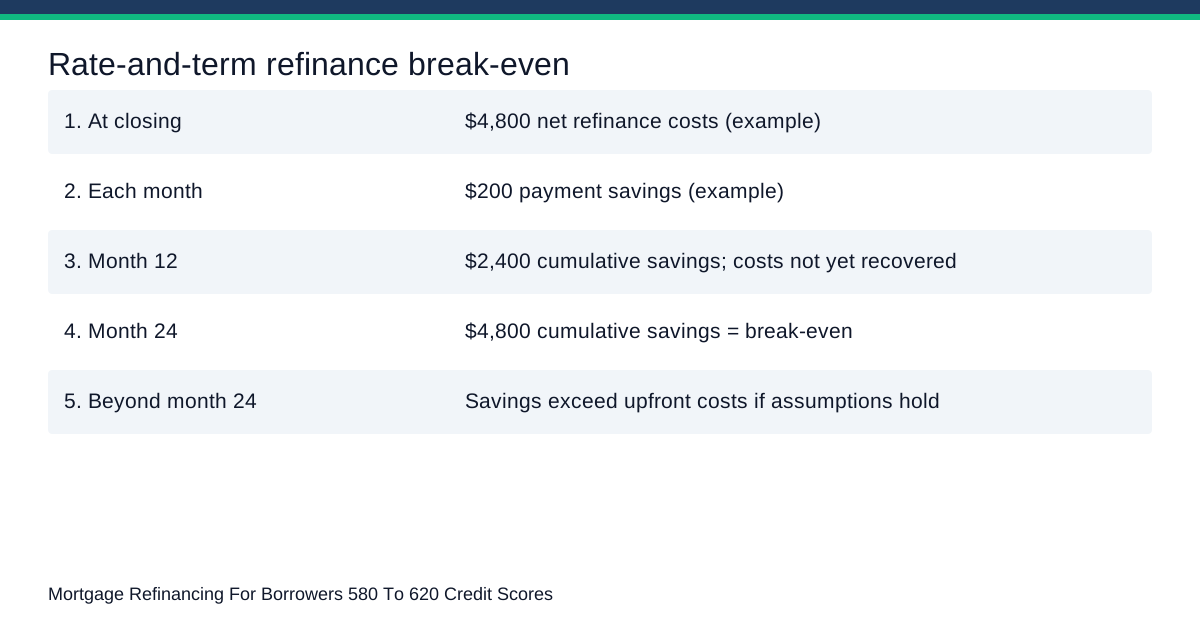
These figures illustrate the premium you'll pay for poor credit jumbo refinancing. Calculate your break-even point carefully—if refinancing saves money through better terms than your current loan, the investment may still make sense despite higher initial costs.
Strategies to Improve Your Approval Odds
Maximize Your Equity Position
The more equity you have, the less risk lenders assume. If possible, delay refinancing until you've paid down principal or property values have increased. Loan-to-value ratios of 60% or less dramatically improve approval chances even with poor credit.
Demonstrate Income Stability and Growth
Two or more years with the same employer, consistent income documentation, and evidence of income growth all serve as compensating factors. Self-employed borrowers should prepare three years of tax returns showing stable or increasing revenue.
Build Substantial Cash Reserves
Accumulating 12-24 months of mortgage payments in liquid accounts shows lenders you can weather financial challenges. This reserve requirement is often non-negotiable for poor credit jumbo refinancing.
Consider Rate-and-Term Refinancing Only
Cash-out refinancing with poor credit dramatically reduces approval likelihood. Stick to rate-and-term refinancing that doesn't increase your loan amount, presenting lower risk to lenders.
Address Credit Issues Directly
If possible, resolve outstanding collections, settle charge-offs, and establish 12+ months of perfect payment history on all current obligations before applying. Even small credit score improvements from 590 to 610 can unlock better loan terms.
Alternative Solutions to Consider
Loan Modification With Current Lender
Before pursuing refinancing, contact your existing lender about modification programs. Some portfolio lenders offer internal modification options that don't require full credit review or refinancing costs.
Waiting and Credit Rebuilding
If your current mortgage terms are manageable, consider delaying refinancing for 12-24 months while actively rebuilding credit. Reaching the 640-660 range opens significantly better refinancing options with lower costs.
Selling and Downsizing
For borrowers facing genuine financial hardship, selling the property and purchasing a less expensive home with remaining equity may provide better long-term financial stability than expensive refinancing.
Frequently Asked Questions
Yes, refinancing a jumbo loan with a 580 credit score is possible through portfolio lenders and alternative financing sources, though you'll pay significantly higher interest rates (typically 9-12%) and origination fees (2-3% of loan amount). You'll need substantial equity (30-40% minimum), significant cash reserves (12-24 months of payments), and comprehensive documentation of income and assets.
What credit score do I need to refinance a jumbo loan conventionally?
Conventional jumbo loan refinancing typically requires minimum credit scores of 700-740, depending on the lender and other compensating factors. Borrowers with scores between 580-620 must look to specialized portfolio lenders, private mortgage companies, or hard money options rather than conventional jumbo refinancing programs.
How much equity do I need to refinance a jumbo loan with poor credit?
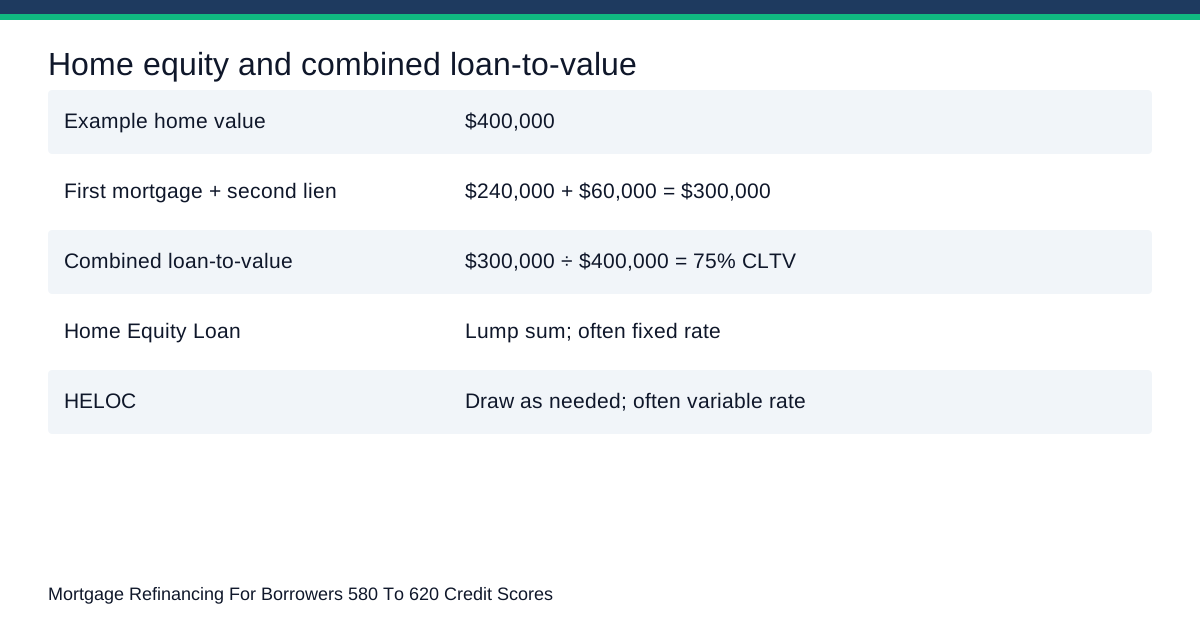
Most lenders offering jumbo refinancing to borrowers with 580-620 credit scores require minimum loan-to-value ratios of 60-70%, meaning you need 30-40% equity. The more equity you have, the better your approval odds and loan terms. Some portfolio lenders may consider 75% LTV with strong compensating factors like high income or substantial reserves.
What are typical interest rates for jumbo refinancing with a 600 credit score?
Interest rates for jumbo refinancing with a 600 credit score typically range from 9-12% in 2026, approximately 2.5-4.5 percentage points above conforming jumbo rates. Exact rates depend on your loan-to-value ratio, cash reserves, income documentation, and the specific lender's risk assessment. Shopping multiple portfolio lenders can yield rate variations of 1-2 percentage points.
How long does jumbo refinancing take with poor credit?
Jumbo refinancing with poor credit typically takes 60-90 days from application to closing, longer than conventional refinancing due to additional documentation requirements, manual underwriting, and more thorough property appraisals. Portfolio lenders conduct extensive financial reviews and often require multiple rounds of documentation. Build extra time into your planning and maintain all financial accounts in stable condition throughout the process.
Take the Next Step Toward Refinancing Your Jumbo Loan
Refinancing jumbo loan with poor credit is it possible? Absolutely—and you've now learned exactly how to approach this specialized financing challenge. While the process requires more preparation, higher costs, and realistic expectations about terms, thousands of borrowers with credit scores between 580 and 620 successfully refinance jumbo loans annually through portfolio lenders and alternative financing programs.
The key to success lies in thorough preparation, understanding your complete cost structure, and working with lenders experienced in poor credit jumbo refinancing. Every borrower's situation is unique, with different equity positions, income levels, and credit challenges requiring customized solutions.
Ready to explore your jumbo refinancing options? Request your free, no-obligation consultation today. Our network of specialized lenders includes portfolio companies, private mortgage sources, and alternative financing experts who regularly work with borrowers in the 580-620 credit score range. We'll review your complete financial situation, calculate your realistic refinancing costs, and connect you with lenders most likely to approve your specific scenario.
Complete our simple online form or call to speak with a jumbo refinancing specialist who understands the unique challenges of refinancing jumbo loan with poor credit is it possible scenarios. Get personalized quotes, compare your options, and take control of your jumbo mortgage refinancing journey today.
Frequently Asked Questions
What credit score is needed to refinance a jumbo loan?
Traditional jumbo loan refinancing typically requires a credit score of 700 or higher. However, borrowers with scores between 580 and 620 may qualify through portfolio lenders, private lenders, or hard money loans, often with higher interest rates and larger equity requirements.
Can I refinance a jumbo loan with a 580 credit score?
Yes, it is possible to refinance a jumbo loan with a 580 credit score, though options are limited. Portfolio lenders and hard money lenders may consider your application if you have substantial equity (30-40% or more), stable income, and significant cash reserves.
What are the costs of refinancing a jumbo loan with poor credit?
Costs can include higher interest rates (2.5-4.5 percentage points above conforming rates), origination fees of 1.5-3% of the loan amount, and higher appraisal fees ($800-$1,500). Some loans may also have prepayment penalties. Exact costs vary by lender and your financial profile.
How much equity do I need to refinance a jumbo loan with bad credit?
Lenders typically require significant equity when refinancing a jumbo loan with poor credit. You may need 30-40% or more equity in your property, meaning a loan-to-value ratio of 60-70% or lower. This reduces the lender's risk and improves your chances of approval.
Key Takeaways
- Understanding your options for refinancing jumbo loan with poor credit is it possible is the first step
- Getting pre-qualified helps you understand your real options