Compare Live Mortgage & Home Equity Rates
Compare current APRs, points, fees, and estimated monthly payments from participating lenders below.
Mortgage rates
Refinancing Investment Property With 600 Credit Score Requirements: Your Complete 2026 Guide
Quick Answer: Yes, refinancing an investment property with a 600 credit score is possible through FHA, VA (if eligible), and portfolio lenders. Expect higher interest rates, lower LTV ratios (70-75%), and stronger documentation requirements including rental income history and cash reserves.
Refinancing Investment Property With 600 Credit Score Requirements is possible, though it requires understanding specialized loan programs and lender criteria. Borrowers with credit scores between 580 and 620 can access FHA, VA (if eligible), and certain portfolio lenders willing to work with non-owner-occupied properties. While conventional refinancing typically demands scores of 640 or higher for investment properties, alternative pathways exist that balance your credit challenges with competitive rates and terms. Expect higher interest rates—typically 1.5-3% above prime conventional rates—along with larger down payment requirements and more rigorous documentation, but refinancing can still lower your monthly payment, access equity, or secure better loan terms even with a 600 credit score.
Understanding Investment Property Refinancing for Mid-Range Credit Scores
Investment property refinancing differs substantially from primary residence refinancing, especially when your credit score falls between 580 and 620. Lenders view non-owner-occupied properties as higher risk because borrowers historically default on investment properties before their primary homes during financial hardship.
This risk perception intensifies when credit scores enter the 600 range. Traditional lenders typically reserve their best investment property refinance products for borrowers with scores above 680, leaving those with 580-620 scores to navigate a more limited but still viable lending landscape.
The good news: the lending environment in 2026 has evolved considerably. More lenders now offer specialized programs recognizing that credit scores don't tell the complete financial story. A 600 credit score might result from medical debt, divorce, or previous financial challenges that don't reflect your current ability to manage investment property debt responsibly.
What Lenders Actually Evaluate Beyond Your Score
When refinancing investment property with a 600 credit score, lenders examine multiple compensating factors:
Debt-to-Income Ratio (DTI): Lenders prefer seeing DTI below 43%, though some portfolio lenders accept up to 50% when other factors are strong. Your DTI calculation includes all debt obligations plus the investment property's projected expenses.
Rental Income Documentation: Expect to provide 12-24 months of rental history, lease agreements, and Schedule E from your tax returns. Lenders typically count 75% of documented rental income toward qualifying, accounting for vacancy and maintenance costs.
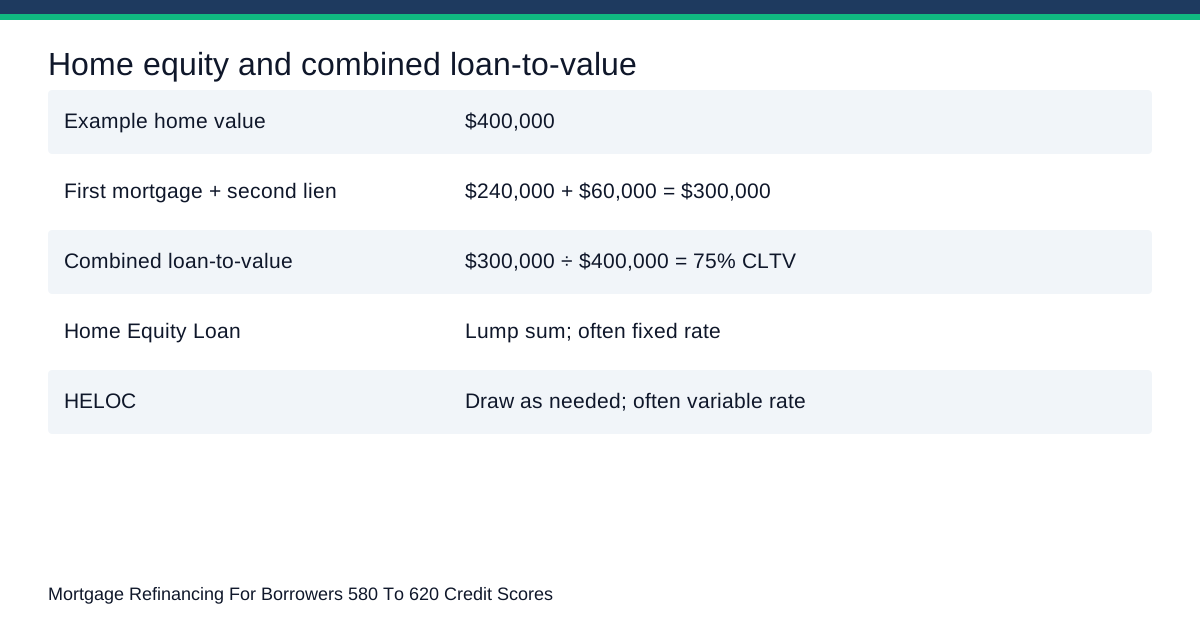
Loan-to-Value Ratio (LTV): With a 600 credit score, maximum LTV ratios typically range from 70-75% for investment property refinancing, meaning you'll need at least 25-30% equity in the property.
Expert Tip
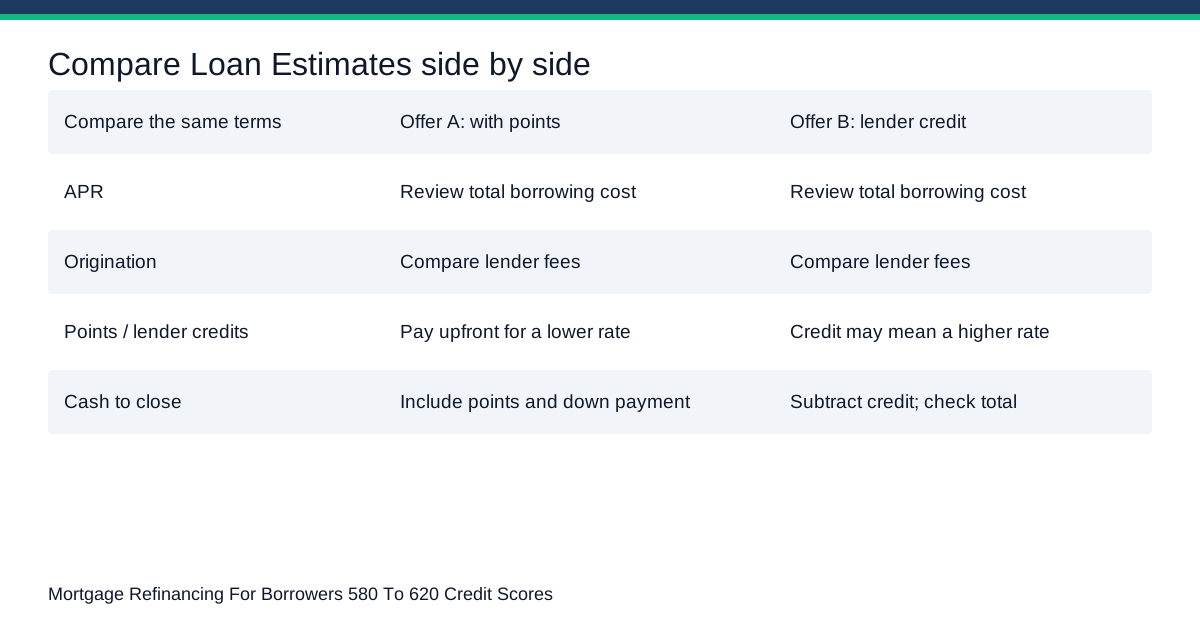
Compare Loan Estimates for the same loan type and term. Include closing costs when calculating whether refinancing saves money.
Cash Reserves: Lenders commonly require 3-6 months of mortgage payments in liquid reserves specifically for the investment property, separate from your personal emergency fund.
Payment History: Your mortgage payment history on the subject property and any other mortgages matters significantly. Zero late payments in the past 12 months strengthens applications considerably.
Loan Programs Available for 600 Credit Score Investment Property Refinancing
FHA Loan Options
The FHA doesn't directly offer investment property loans, but there's a workaround: if you purchased your current primary residence with an FHA loan and want to convert it to a rental while refinancing into a new FHA loan on a different primary residence, this creates refinancing opportunities. However, this strategy requires occupying the new property as your primary residence.
Some borrowers successfully use FHA cash-out refinancing before converting their property to rental status, though this requires careful timing and adherence to FHA occupancy requirements.
Portfolio Lenders and Credit Unions
Portfolio lenders—institutions that keep loans on their own books rather than selling them to secondary markets—offer the most flexibility for Refinancing Investment Property With 600 Credit Score Requirements. These lenders create their own underwriting guidelines and can evaluate your complete financial picture.
Credit unions, particularly those serving specific communities or professions, often provide portfolio lending with competitive rates even for borrowers with credit challenges. Membership requirements vary, but many allow joining through small association fees or community connections.
Expected rates from portfolio lenders in 2026 range from 7.5-9.5% for borrowers with 600 credit scores, depending on LTV, reserves, and compensating factors.
Hard Money and Bridge Loans
When traditional financing isn't available, hard money lenders provide short-term refinancing solutions based primarily on property equity rather than credit scores. These loans typically feature:
- Interest rates: 9-14%
- Terms: 6-36 months
- LTV ratios: up to 70%
- Origination fees: 2-5 points
Non-QM (Non-Qualified Mortgage) Lenders
Non-QM lenders emerged as a significant force in the lending landscape, offering investment property refinancing to borrowers who don't fit traditional qualified mortgage criteria. These programs often accept:
- Credit scores as low as 580
- Alternative income documentation (bank statements instead of tax returns)
- Higher DTI ratios
- Interest-only payment options
Step-by-Step Process for Refinancing Investment Property With a 600 Credit Score
- Review and repair your credit report (30-90 days before applying): Obtain reports from all three bureaus, dispute inaccuracies, and pay down revolving balances to below 30% utilization. Even improving from 600 to 620 expands your lender options significantly.
- Gather comprehensive documentation: Assemble 24 months of mortgage payment history, rental income documentation, tax returns (2 years), bank statements (3 months), current lease agreements, property insurance declarations, and recent property tax statements.
- Calculate your property's market value: Obtain a broker price opinion (BPO) or preliminary property valuation to estimate equity position. Lenders will require formal appraisals, but knowing your approximate LTV ratio helps target appropriate loan programs.
- Research and contact specialized lenders: Approach 5-8 lenders including portfolio lenders, credit unions, non-QM specialists, and hard money lenders. Explain your credit score upfront and ask specifically about investment property refinance programs for borrowers in the 580-620 range.
- Compare loan estimates carefully: Federal law requires lenders to provide standardized Loan Estimates within three business days of application. Compare interest rates, APR (which includes fees), closing costs, and prepayment penalties.
- Submit formal application: Apply with 2-3 lenders offering the most competitive terms. Multiple mortgage inquiries within a 45-day window count as a single inquiry for credit scoring purposes.
- Complete appraisal and underwriting: The lender orders an appraisal (expect $500-750 costs) and submits your file to underwriting. Be responsive to documentation requests—delays can cause rate lock expirations.
- Review closing disclosure and close: You'll receive a Closing Disclosure at least three business days before closing. Review all terms carefully, then sign final documents and pay closing costs.
Cost Analysis: What to Expect When Refinancing With a 600 Credit Score
Understanding the complete cost picture helps you evaluate whether refinancing makes financial sense for your investment property situation.
| Cost Category | Typical Range | Notes for 600 Credit Score Borrowers |
|---|---|---|
| Interest Rate | 7.5% - 11.0% | Approximately 1.5-3% above conventional investment property rates |
| Origination Fee | 1-5 points | Portfolio and non-QM lenders often charge 2-3 points; conventional 0.5-1 point |
| Appraisal | $500 - $900 | Investment properties sometimes require higher-cost appraisals |
| Credit Report | $25 - $75 | Tri-merge reports from all three bureaus |
| Title Search & Insurance | $1,000 - $2,500 | Varies by property value and location |
| Recording Fees | $100 - $500 | Government charges for recording new mortgage |
| Attorney/Escrow Fees | $500 - $1,500 | Required in some jurisdictions |
| Prepayment Penalty (existing loan) | $0 - $5,000+ | Check your current mortgage terms |
| Total Estimated Closing Costs | $8,000 - $18,000 | For a $200,000 refinance; scales with loan amount |
Break-Even Analysis
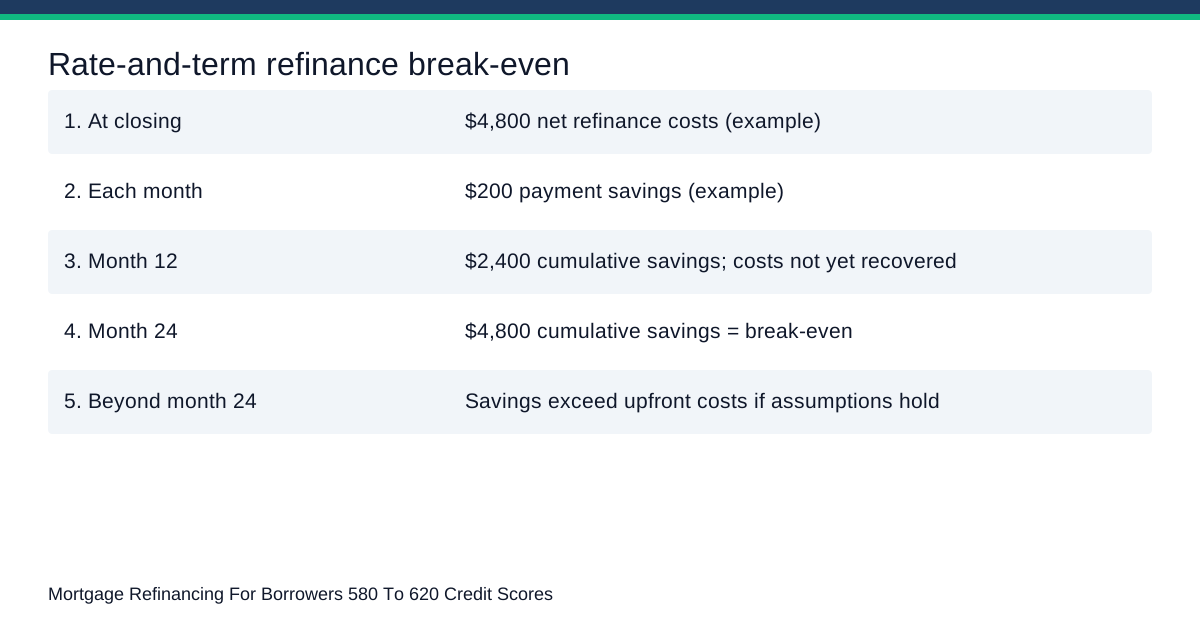
Calculate your break-even point by dividing total closing costs by monthly savings. For example, if refinancing costs $12,000 and reduces your monthly payment by $300, you'll break even after 40 months (3.3 years). If you plan to hold the property longer than this period, refinancing likely makes financial sense.
Strategies to Improve Your Approval Odds and Terms
Bring Additional Compensating Factors
When Refinancing Investment Property With 600 Credit Score Requirements, compensating factors significantly influence lender decisions:
Larger Down Payment: If pursuing a cash-out refinance, taking less cash (resulting in lower LTV) improves approval odds and rates. Targeting 65% LTV versus 75% LTV might reduce your interest rate by 0.5-1%.
Co-Borrower Addition: Adding a co-borrower with stronger credit shares responsibility and often qualifies you for better terms. Ensure the co-borrower understands their legal obligations.
Additional Collateral: Some portfolio lenders accept additional properties as cross-collateralization, reducing their risk and improving your terms.
Professional Property Management: Demonstrating professional management rather than self-management shows lenders you've mitigated operational risks.
Timing Your Refinance Strategically
Market conditions substantially impact available programs and rates. Monitor these factors:
Federal Reserve Policy: Interest rate trends affect all mortgage rates. Refinancing during rate dip periods—even temporarily—can save thousands over your loan term.
Seasonal Lender Behavior: Some lenders offer more aggressive programs in Q4 to meet annual lending goals, while others expand capacity in Q1 with renewed budgets.
Your Credit Improvement Timeline: If you're actively repairing credit, waiting 3-6 months might elevate you to the 620-640 range, substantially expanding your options and improving terms.
Tax Implications and Financial Considerations
Refinancing investment property creates several tax and financial considerations distinct from primary residence refinancing:
Interest Deductibility: Investment property mortgage interest remains fully deductible against rental income, unlike primary residence interest which faces limitations after tax law changes. This deductibility improves the effective cost of refinancing.
Cash-Out Refinance Tax Treatment: Cash extracted through refinancing isn't taxable income, but how you deploy those funds matters. Using proceeds for property improvements maintains full interest deductibility; using them for personal purposes may limit deductions.
Closing Cost Deductibility: Most investment property refinance closing costs must be amortized over the loan term rather than deducted immediately. However, points paid may be deductible over the loan life, and some fees may qualify as immediate deductions.
Depreciation Reconsideration: Refinancing doesn't directly impact depreciation schedules, but if you extract equity for renovations, those improvements create new depreciable basis additions.
Consult with a tax professional familiar with investment property taxation to optimize your refinancing strategy's tax efficiency.
Red Flags That May Derail Your Application
Understanding potential dealbreakers helps you address issues proactively:
Recent Late Mortgage Payments: Late payments on any mortgage within the past 12 months significantly damage applications. Even one 30-day late payment may trigger denials from many lenders.
Recent Foreclosure or Bankruptcy: Most lenders require 2-4 years since foreclosure or bankruptcy discharge before considering investment property refinancing, with longer waiting periods for borrowers under 620 credit scores.
Insufficient Equity: With credit scores around 600, you'll rarely find lenders accepting LTV ratios above 75% for investment properties. If your property value has declined, refinancing may not be possible until you pay down principal or values recover.
Undocumented Rental Income: Cash rent payments without proper documentation won't qualify as income. Lenders require lease agreements, deposit records, and tax reporting of rental income.
Property Condition Issues: Appraisals revealing substantial deferred maintenance, safety issues, or building code violations can halt refinancing until repairs are completed.
Frequently Asked Questions
Several lenders work with borrowers at 580 credit scores for investment property refinancing, primarily hard money lenders, some non-QM lenders, and select portfolio lenders. However, your options expand considerably at 600, and even more at 620. The 580-600 range typically limits you to higher-cost financing (10-14% interest rates) with substantial equity requirements (70% LTV or less). If possible, improving your score to 600+ before refinancing saves significantly on interest costs over the loan term.
What credit score is needed to refinance a rental property with cash-out?
Cash-out refinancing on rental properties typically requires higher credit scores than rate-and-term refinancing because lenders view equity extraction as higher risk. Most conventional lenders require 660-680 minimum for cash-out on investment properties. However, portfolio lenders and non-QM specialists often accommodate cash-out refinancing at 600 credit scores, though you'll face maximum LTV ratios of 65-70% and interest rates in the 8-11% range. The equity you can access decreases substantially at lower credit scores—expect to retain at least 30-35% equity post-refinancing.
How long does investment property refinancing take with bad credit?
Investment property refinancing timelines extend 45-90 days for borrowers with credit scores between 580-620, compared to 30-45 days for borrowers with excellent credit. The extended timeline results from more rigorous documentation requirements, additional underwriting reviews, and often working with smaller lenders who process fewer applications. Portfolio lenders and credit unions sometimes move faster than non-QM lenders due to in-house decision-making. Improve your timeline by assembling complete documentation before applying, responding immediately to underwriter requests, and maintaining clear communication with your loan officer.
Will refinancing my investment property hurt my credit score?
Refinancing temporarily impacts your credit score through several mechanisms: the hard inquiry (typically 5-10 points, recovering within months), increased credit utilization if you take cash out and pay down other debts, and the new account's effect on average account age. However, these impacts are generally minor and temporary. Importantly, if refinancing improves your DTI ratio or payment history remains perfect, the long-term credit impact is often positive. Multiple mortgage inquiries within 45 days count as a single inquiry for scoring purposes, so rate shopping won't multiply the credit impact.
Are there no-closing-cost refinance options for investment properties with 600 credit scores?
True no-closing-cost refinancing is rare for investment properties, especially for borrowers with credit scores in the 600 range. However, some lenders offer "no-out-of-pocket" refinancing where closing costs are rolled into the loan balance or offset through lender credits in exchange for slightly higher interest rates (typically 0.25-0.5% higher). This approach makes sense if you plan to refinance again within 3-5 years once your credit improves, as you'll avoid upfront costs while maintaining access to better terms later. Carefully compare the total interest cost increase versus upfront closing costs to determine which approach saves more over your expected holding period.
Take the Next Step: Get Your Free Investment Property Refinance Consultation
Refinancing Investment Property With 600 Credit Score Requirements demands expertise in navigating specialized lending programs and presenting your financial situation optimally. While your credit score presents challenges, it doesn't eliminate opportunities to reduce interest costs, access equity, or improve loan terms on your investment property.
Our nationwide network of lenders specializes in investment property refinancing for borrowers with credit scores between 580 and 620. We connect you with portfolio lenders, credit unions, and non-QM specialists who evaluate your complete financial picture rather than making decisions based solely on credit scores.
Request your free, no-obligation refinance consultation today. Our mortgage specialists will review your situation, explain available programs, and provide customized rate quotes from multiple lenders—helping you make an informed decision about refinancing your investment property. There's no cost for the consultation and no obligation to proceed. Simply complete our brief online form or call our specialists to begin exploring your refinancing options with lenders who understand that a 600 credit score doesn't define your financial future.
Don't let credit score misconceptions prevent you from potentially saving thousands on your investment property mortgage. Connect with experienced professionals who specialize in helping borrowers exactly like you secure favorable refinancing terms despite credit challenges. Take the first step toward better loan terms and improved cash flow on your investment property today.
Frequently Asked Questions
What credit score is needed to refinance an investment property?
Conventional lenders typically require a minimum credit score of 640 for investment property refinancing. However, borrowers with scores between 580 and 620 may qualify through FHA, VA, or portfolio lenders, though with stricter terms and higher rates.
Can I refinance an investment property with a 600 credit score and no equity?
Refinancing with no equity is difficult because lenders require a loan-to-value ratio of 70-75% for investment properties with a 600 credit score. You typically need at least 25-30% equity in the property to qualify.
What documents do I need to refinance an investment property with a 600 credit score?
Lenders typically require 12-24 months of rental history, lease agreements, Schedule E from tax returns, proof of cash reserves (3-6 months of mortgage payments), and a debt-to-income ratio below 43-50%.
Are interest rates higher for investment property refinancing with a 600 credit score?
Yes, interest rates for investment property refinancing with a 600 credit score are typically 1.5-3% higher than prime conventional rates due to increased lender risk. Shopping multiple lenders can help you find competitive options.
Key Takeaways
- Understanding your options for refinancing investment property with 600 credit score requirements is the first step
- Getting pre-qualified helps you understand your real options