Compare Live Mortgage & Home Equity Rates
Compare current APRs, points, fees, and estimated monthly payments from participating lenders below.
Mortgage rates
How to Remove PMI When Refinancing With Low Credit Score
Private Mortgage Insurance (PMI) can add hundreds of dollars to your monthly mortgage payment, making homeownership significantly more expensive. If you're wondering how to remove PMI when refinancing with low credit score in the 580-620 range, the good news is that it's possible—though it requires careful planning and understanding of your options. While a low credit score presents challenges, homeowners with credit scores between 580 and 620 can successfully refinance to eliminate PMI by building at least 20% equity in their home, choosing the right loan program, and working with lenders who specialize in non-prime borrowers. This comprehensive guide will walk you through proven strategies to remove PMI through refinancing, even with less-than-perfect credit.
Understanding PMI and Why It Matters for Low Credit Score Borrowers
Private Mortgage Insurance protects lenders when borrowers make down payments of less than 20% on conventional loans. For homeowners with credit scores in the 580-620 range, PMI rates typically run higher than those with excellent credit—often between 1.5% and 2.5% of the original loan amount annually.
On a $250,000 mortgage, this translates to $3,750 to $6,250 per year, or approximately $312 to $520 added to your monthly payment. Over the life of a 30-year loan, you could pay $112,500 or more just in PMI premiums.
When considering how to remove pmi when refinancing with low credit score, you should understand all available options.
The relationship between your credit score and PMI costs is direct: lower credit scores signal higher risk to lenders, resulting in higher PMI premiums. This makes removing PMI even more financially beneficial for borrowers in the 580-620 credit range, as they're typically paying premium rates for this insurance.
Current PMI Rates by Credit Score Range (2026)
| Credit Score Range | Average Annual PMI Rate | Monthly Cost on $250K Loan |
|---|---|---|
| 760+ | 0.3% - 0.7% | $62 - $146 |
| 700-759 | 0.5% - 1.0% | $104 - $208 |
| 660-699 | 0.8% - 1.5% | $167 - $312 |
| 620-659 | 1.2% - 2.0% | $250 - $417 |
| 580-619 | 1.5% - 2.5% | $312 - $520 |
Building Equity: The Foundation for PMI Removal
The most critical requirement for removing PMI when refinancing is achieving at least 20% equity in your home. With a low credit score, this becomes your strongest leverage point with lenders.
Equity can be built through three primary methods:
- Principal paydown through regular mortgage payments - Each monthly payment reduces your loan balance, gradually increasing equity
- Property value appreciation - Market conditions that increase your home's value automatically boost your equity position
- Home improvements - Strategic renovations that increase your property's appraised value
Calculating Your Current Equity Position
Before exploring refinancing options, determine your exact equity percentage using this formula:
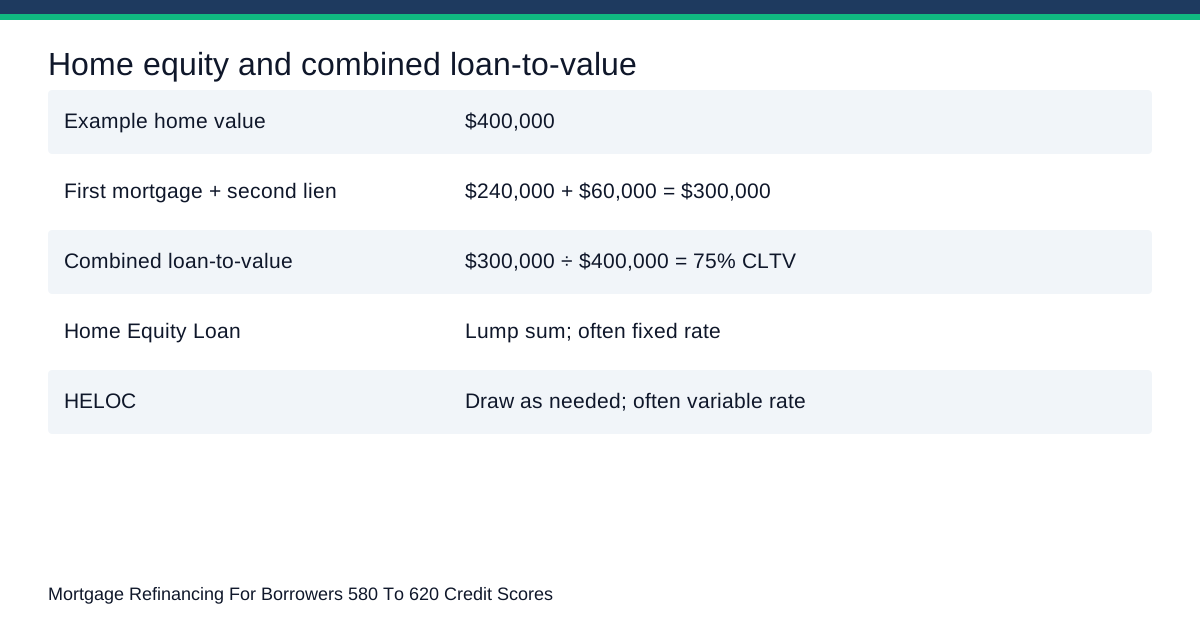
Equity Percentage = (Current Home Value - Remaining Mortgage Balance) ÷ Current Home Value × 100
For example, if your home is currently worth $300,000 and you owe $225,000, your equity is 25% ($75,000 ÷ $300,000). This would position you well for refinancing to remove PMI, even with a credit score in the 580-620 range.
Expert Tip
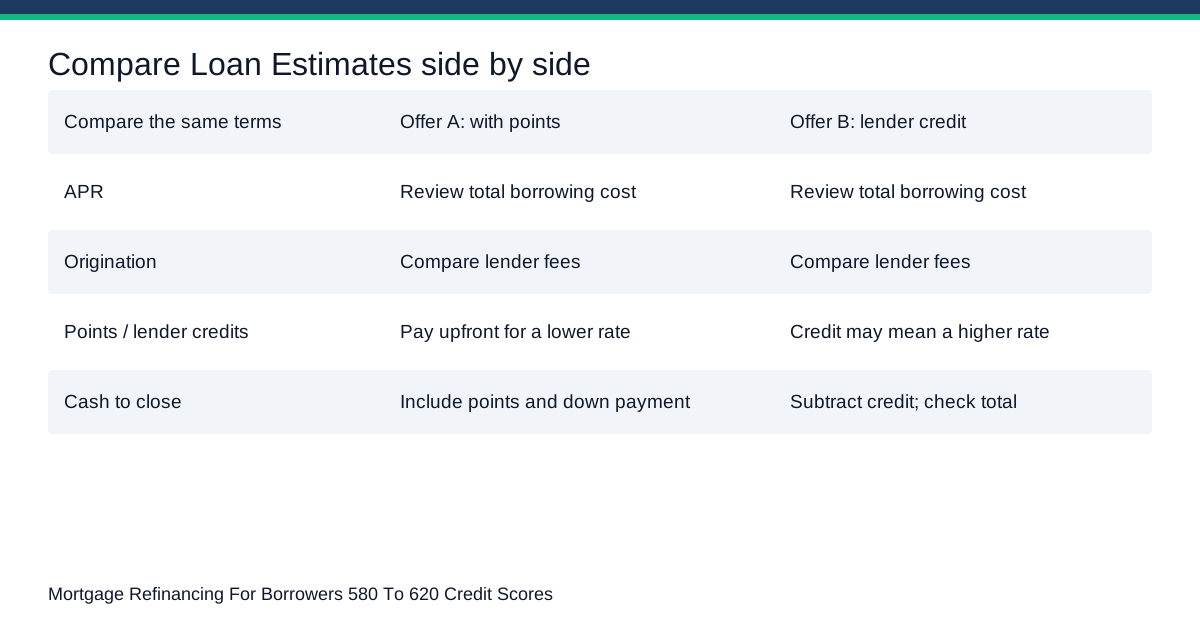
Compare Loan Estimates for the same loan type and term. Include closing costs when calculating whether refinancing saves money.
Order a professional appraisal to establish current market value—expect to pay between $400 and $650 for this service in 2026. While this represents an upfront cost, it provides the documentation lenders require and may reveal that you already have sufficient equity.
Refinancing Options for 580-620 Credit Score Borrowers
Not all refinance programs are created equal, and some are significantly more accessible to borrowers with credit scores in the 580-620 range.
FHA Streamline Refinance
If your current mortgage is FHA-insured, the FHA Streamline Refinance program offers the most accessible path forward. This program requires:
- Minimum credit score of 580
- No new appraisal in most cases
- Reduced documentation requirements
- Net tangible benefit to the borrower
Conventional Refinance
Conventional refinancing allows you to eliminate PMI once you reach 20% equity, but qualifying with a 580-620 credit score requires working with the right lenders. Expect these requirements:
- Minimum credit scores typically 580-620 (lender-specific)
- Higher interest rates than borrowers with excellent credit (typically 1.5-3% higher)
- Loan-to-value ratio of 80% or less (20% equity minimum)
- Debt-to-income ratio below 43-50%
- Larger cash reserves (3-6 months of payments)
VA Interest Rate Reduction Refinance Loan (IRRRL)
Military service members, veterans, and eligible surviving spouses with existing VA loans have access to the streamlined IRRRL program, which:
- Requires no minimum credit score
- Eliminates PMI/MIP entirely (VA loans never require mortgage insurance)
- Offers reduced closing costs
- Requires no appraisal in most cases
Step-by-Step Process to Remove PMI Through Refinancing
Follow this systematic approach to successfully refinance and eliminate PMI with a credit score between 580 and 620:
Step 1: Review Your Credit Report and Score Obtain free credit reports from all three bureaus and verify accuracy. Dispute any errors that may be negatively impacting your score. Even a 10-20 point improvement can affect your interest rate and approval odds.
Step 2: Calculate Your Loan-to-Value Ratio Determine if you have reached the crucial 20% equity threshold. If you're close but not quite there, consider whether you can make a lump sum principal payment to reach this level.
Step 3: Research Specialized Lenders Not all lenders work with borrowers in the 580-620 credit range. Research and contact lenders who specialize in non-prime borrowers, credit unions, and community banks that may have more flexible underwriting.
Step 4: Get Pre-Qualified with Multiple Lenders Submit applications to at least 3-5 lenders to compare terms. Do this within a 14-45 day window so credit inquiries count as a single inquiry for scoring purposes.
Step 5: Order a Professional Appraisal Most lenders will require an appraisal to confirm your home's current value and verify that you have sufficient equity to eliminate PMI.
Step 6: Prepare Complete Documentation Gather required documents including:
- Two years of tax returns
- Recent pay stubs (last 30-60 days)
- Bank statements (last 2-3 months)
- Current mortgage statement
- Proof of homeowners insurance
- Government-issued identification
Step 8: Complete Closing Review your Closing Disclosure at least three business days before closing. Verify that PMI is not included in your new loan terms and bring required funds for closing costs.
Improving Your Refinance Terms with a 580-620 Credit Score
While refinancing is possible with credit scores in the 580-620 range, taking these additional steps can significantly improve your terms:
Pay Down High Credit Card Balances
Credit utilization accounts for approximately 30% of your credit score. Reducing balances to below 30% of limits (ideally below 10%) can boost your score by 20-50 points within 30-60 days.
Consider a Co-Borrower or Co-Signer
Adding a creditworthy co-borrower with a higher credit score can improve your combined financial profile, potentially qualifying you for better interest rates and terms.
Increase Your Down Payment on the New Loan
If possible, bringing additional cash to closing reduces your loan-to-value ratio below 80%, which not only eliminates PMI but may also improve your interest rate.
Wait and Improve Your Score
If your equity is borderline or rates are significantly higher due to your credit score, consider waiting 6-12 months while actively improving your credit. During this time:
- Make all payments on time (35% of your credit score)
- Pay down revolving debt
- Avoid opening new credit accounts
- Keep old accounts open to maintain credit history length
Cost-Benefit Analysis: When Refinancing Makes Sense
Refinancing to remove PMI isn't always the optimal financial decision. Calculate whether refinancing makes sense using this framework:
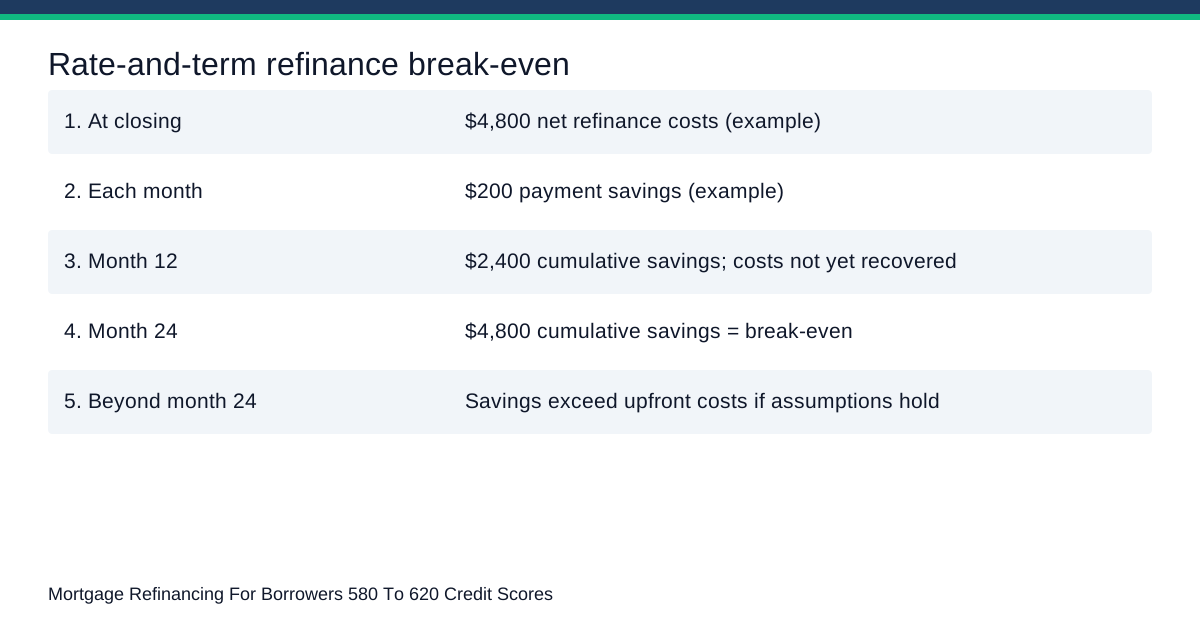
Break-Even Analysis Formula: Total Refinancing Costs ÷ Monthly PMI Savings = Months to Break Even
For example:
- Refinancing closing costs: $5,000
- Current monthly PMI payment: $400
- Break-even point: $5,000 ÷ $400 = 12.5 months
Additional Factors to Consider
Beyond the break-even calculation, evaluate:
- Interest rate changes: If refinancing increases your rate by more than 0.5%, recalculate total interest paid over the loan term
- Loan term reset: Refinancing into a new 30-year mortgage restarts your amortization schedule, potentially increasing total interest paid
- Tax implications: Mortgage interest deductibility changed under recent tax law; consult a tax professional
- Alternative uses for closing cost funds: Consider whether investing closing costs elsewhere might provide better returns
Alternatives to Refinancing for PMI Removal
If refinancing proves too costly or you don't quite qualify, consider these alternatives:
Lender-Initiated PMI Cancellation: Federal law requires automatic PMI termination when your loan balance reaches 78% of the original home value, provided you're current on payments.
Borrower-Requested PMI Cancellation: Once you reach 20% equity based on the original property value, you can request PMI removal from your current lender. This avoids refinancing costs entirely but requires:
- Written request to your loan servicer
- Proof of current payment status
- Possible appraisal demonstrating current value
- No subordinate liens on the property
Home Improvements with Reappraisal: Strategic renovations that increase home value can boost equity. After completing improvements, request a new appraisal to potentially demonstrate 20% equity.
Frequently Asked Questions
A: Yes, refinancing to remove PMI with a 580 credit score is possible, though options are more limited than for higher credit scores. You'll need at least 20% equity in your home, and you should expect higher interest rates than borrowers with excellent credit. FHA to conventional refinancing and VA IRRRL programs offer the most accessible paths for credit scores in this range. Working with lenders who specialize in non-prime borrowers increases your approval odds significantly.
Q: How much equity do I need to remove PMI when refinancing with bad credit?
A: The standard requirement is 20% equity (80% loan-to-value ratio) to eliminate PMI through refinancing. However, borrowers with credit scores between 580 and 620 should target 22-25% equity to strengthen their application and improve approval chances. Some lenders may require up to 25% equity for borrowers with lower credit scores as an additional risk mitigation measure.
Q: What are typical interest rates for refinancing with a 600 credit score in 2026?
A: Borrowers with credit scores around 600 can expect interest rates approximately 1.5-3.0 percentage points higher than rates for borrowers with excellent credit (740+). As of 2026, if prime rates are around 6.5-7.0%, borrowers with 600 credit scores might see rates between 8.0-9.5%. The exact rate depends on your complete financial profile, including debt-to-income ratio, employment history, loan-to-value ratio, and the specific lender's guidelines.
Q: Will refinancing hurt my credit score?
A: Refinancing typically causes a temporary, minor decrease in your credit score due to the hard inquiry and the new account opening. Most borrowers see a 5-15 point drop initially. However, if you shop for rates within a 14-45 day period, multiple inquiries count as one. Your score typically recovers within 3-6 months, and establishing a positive payment history on the new loan can ultimately improve your credit over time.
Q: How long does it take to refinance and remove PMI with low credit?
A: The refinancing process for borrowers with 580-620 credit scores typically takes 45-60 days from application to closing, slightly longer than for higher credit score borrowers due to additional documentation requirements and underwriting scrutiny. Factors affecting timeline include appraisal scheduling, documentation completeness, lender workload, and whether any credit or title issues arise. Preparation and working with an experienced loan officer can help streamline the process.
Take the Next Step: Get Your Free Refinancing Consultation
Understanding how to remove PMI when refinancing with low credit score is just the beginning—taking action is what transforms hundreds of dollars in monthly savings into reality. Despite the challenges associated with credit scores in the 580-620 range, thousands of homeowners successfully refinance each year to eliminate PMI and reduce their monthly housing costs.
The refinancing landscape changes constantly, with different lenders offering varying programs and requirements. What matters most is connecting with mortgage professionals who specialize in working with borrowers in your credit score range and who can evaluate your specific situation—including your equity position, income stability, and financial goals.
Request your free, no-obligation refinancing consultation today. Our network of specialized lenders understands the unique challenges faced by borrowers with credit scores between 580 and 620, and they've helped thousands successfully refinance to remove PMI. During your consultation, you'll receive:
- Personalized equity analysis for your property
- Comparison of refinancing options available for your credit profile
- Accurate cost-benefit calculations for your specific situation
- Customized strategies to improve your refinancing terms
- Current rate quotes from multiple lenders specializing in non-prime borrowers
Key Takeaways
- Understanding your options for how to remove pmi when refinancing with low credit score is the first step
- Getting pre-qualified helps you understand your real options