Compare Live Mortgage & Home Equity Rates
Compare current APRs, points, fees, and estimated monthly payments from participating lenders below.
Mortgage rates
How to Dispute Credit Errors Before Refinancing Mortgage Application
Quick Answer: To dispute credit errors before refinancing, start by obtaining free credit reports from AnnualCreditReport.com. Review each report for inaccuracies like incorrect late payments or accounts not yours. File disputes online with each credit bureau (Equifax, Experian, TransUnion) and provide supporting documents. Bureaus typically investigate within 30 days. Correcting errors can improve your credit score, potentially helping borrowers with 580-620 scores qualify for better refinance terms.
If you're considering mortgage refinancing with a credit score between 580 and 620, discovering errors on your credit report could be costing you thousands of dollars in unnecessary interest payments. Learning how to dispute credit errors before refinancing mortgage application is one of the most powerful strategies to improve your approval odds and secure better interest rates. Even a 20-30 point credit score increase from correcting inaccuracies can mean the difference between approval and denial, or save you $50-$150 monthly on mortgage payments. This comprehensive guide walks you through the exact process of identifying, documenting, and successfully disputing credit report errors before submitting your refinance application, giving you the best possible chance at favorable loan terms despite starting in the subprime credit range.
Why Credit Report Accuracy Matters for Mortgage Refinancing (580-620 Credit Range)
When your credit score falls between 580 and 620, you're in a challenging position for mortgage refinancing. Lenders classify this range as subprime, which typically results in higher interest rates, larger down payment requirements, and more stringent approval criteria. However, studies consistently show that approximately 34% of Americans have at least one error on their credit reports, and nearly 5% have errors serious enough to impact lending decisions.
When considering how to dispute credit errors before refinancing mortgage application, you should understand all available options.
For borrowers in your credit range, even small errors can have devastating consequences. A single incorrectly reported late payment might drop your score by 60-80 points. A collections account that isn't actually yours could reduce your score by 100 points or more. When you're already hovering near the minimum qualifying threshold for most refinance programs, these errors can completely derail your application.
The financial impact is substantial. A borrower with a 620 credit score typically receives interest rates 1.5-2.5% higher than someone with a 720 score on the same loan product. On a $250,000 30-year refinance, this translates to approximately $75,000-$125,000 in additional interest paid over the loan's lifetime. Correcting even one significant error could save you tens of thousands of dollars.
Understanding Common Credit Report Errors That Affect Refinancing
Before you can dispute credit errors, you need to know what to look for. Credit report mistakes fall into several distinct categories, each with different impacts on your refinancing prospects.
Identity Confusion and Mixed Files
Credit bureaus sometimes merge information from consumers with similar names, Social Security numbers, or addresses. You might find accounts, addresses, or employment history that belong to someone else entirely. These mixed file errors are particularly common for people with common names or family members (like fathers and sons) with similar names.
Incorrect Account Status Reporting
Accounts marked as delinquent when you've made timely payments represent one of the most damaging errors. You might also find accounts still showing as open when you closed them years ago, or accurate negative information that should have been removed after the legal reporting period (typically seven years for most negative items, ten years for Chapter 7 bankruptcy).
Balance and Credit Limit Errors
Lenders might report incorrect balances or credit limits, artificially inflating your credit utilization ratio—a critical factor in credit scoring. An account showing a $10,000 balance when you actually owe $2,000 dramatically impacts your debt-to-income calculations for refinancing.
Expert Tip
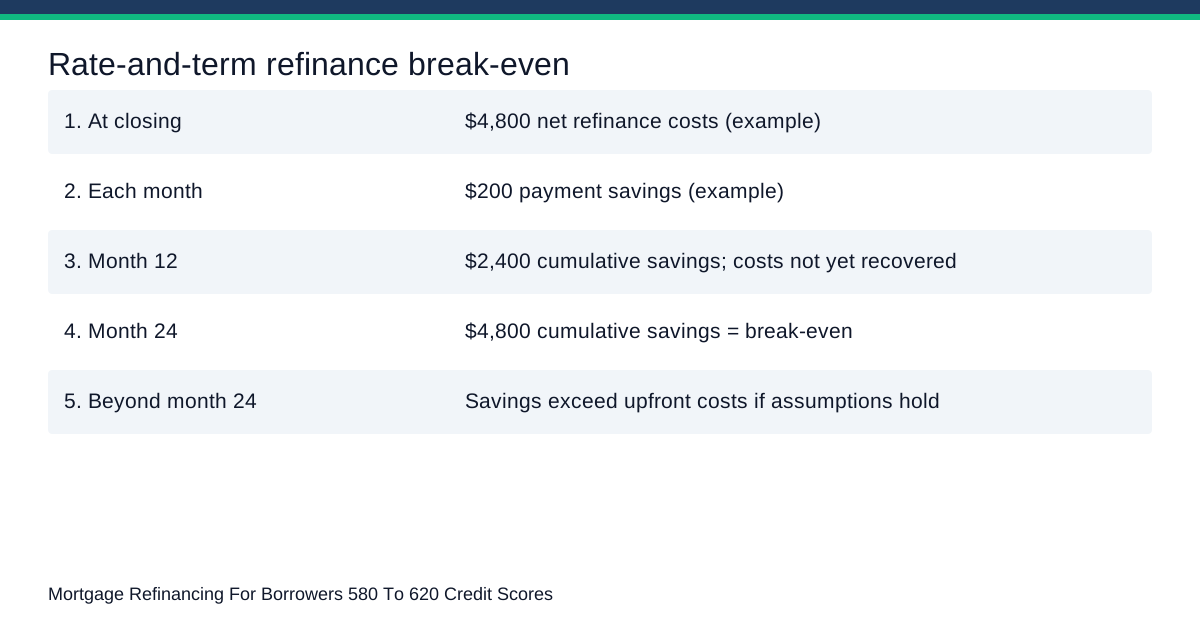
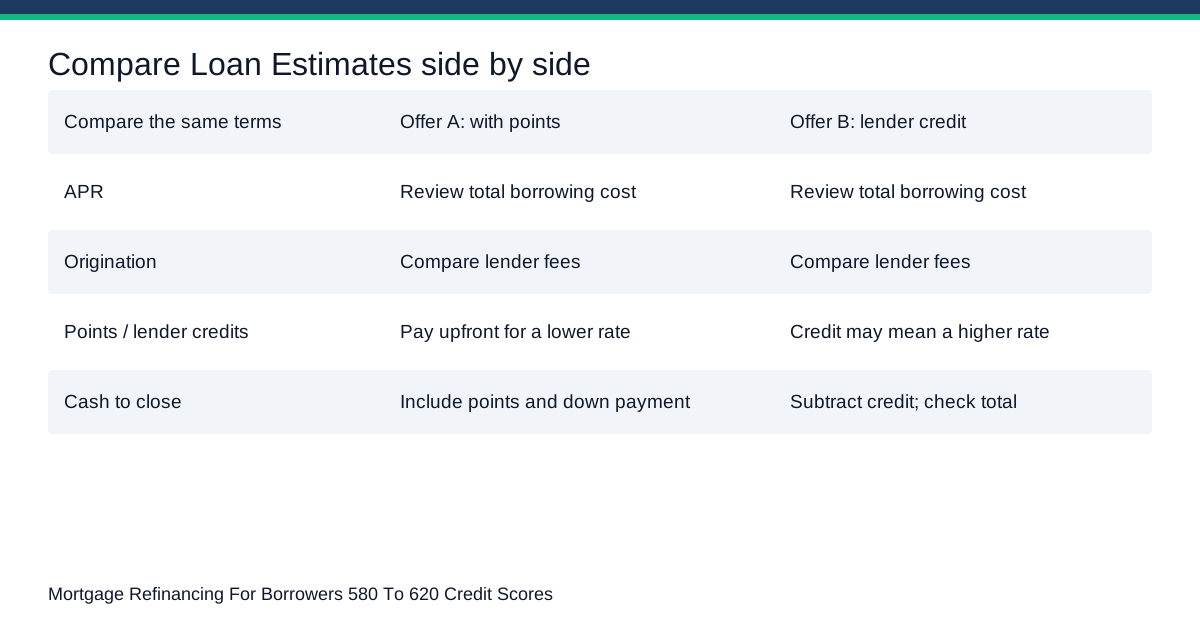
Compare Loan Estimates for the same loan type and term. Include closing costs when calculating whether refinancing saves money.
Duplicate Accounts
The same debt appearing multiple times on your report inflates your total debt load. This commonly occurs when debts are sold to collection agencies, with both the original creditor and the collection agency reporting the same obligation.
Fraudulent Accounts
Identity theft can place entirely fraudulent accounts on your credit report. These unauthorized accounts damage your credit score and need immediate attention before any refinancing application.
The Step-by-Step Credit Dispute Process
Successfully disputing credit errors requires a systematic approach with proper documentation and follow-through. Here's the exact process that delivers results:
Step 1: Obtain All Three Credit Reports
Request your complete credit reports from Equifax, Experian, and TransUnion. You're entitled to one free report from each bureau annually at AnnualCreditReport.com. For mortgage refinancing purposes, you should pull all three simultaneously since lenders typically review reports from all bureaus. The cost for additional reports beyond your annual free copies ranges from $10-$25 per bureau in 2026.
Step 2: Review Each Report Thoroughly
Allocate 30-60 minutes per report for careful examination. Check personal information, account histories, payment records, credit inquiries, and public records. Create a spreadsheet documenting every error with the following information: creditor name, account number, type of error, what the report shows, and what it should show.
Step 3: Gather Supporting Documentation
Collect evidence proving the error. This might include bank statements, payment confirmations, correspondence with creditors, identity documents, police reports (for fraud), or account closure confirmations. The stronger your documentation, the faster the dispute resolution.
Step 4: File Disputes with Credit Bureaus
Submit disputes to each bureau reporting the error. You have three filing options:
- Online: Fastest processing (typically 30 days), but you may have less documentation space and potentially weaker legal standing
- Mail: Longer processing (30-45 days) but creates a paper trail and allows comprehensive documentation
- Phone: Generally not recommended as the initial filing method due to lack of documentation trail
Step 5: Follow Up with Original Creditors
Simultaneously dispute errors directly with the creditors reporting incorrect information. Creditors have the same obligation to investigate and correct errors. This dual-track approach often accelerates resolution.
Step 6: Monitor Investigation Progress
Credit bureaus must investigate within 30 days (45 days if you provide additional information during the investigation). They'll contact the creditor, who must verify the information or correct it. During this period, check your mail and email regularly for requests for additional information.
Step 7: Review Investigation Results
The bureau will send you results in writing. If the dispute succeeds, request updated credit reports to confirm corrections. If denied, you can add a 100-word statement to your report explaining the dispute, escalate to the Consumer Financial Protection Bureau (CFPB), or consult with a credit repair attorney.
Timeline Considerations for Refinancing Applications
Understanding timing is crucial when planning to dispute credit errors before refinancing mortgage application. The dispute process typically takes 30-90 days from initial filing to credit report updates, depending on complexity and how many errors you're addressing.
For optimal refinancing outcomes, follow this timeline framework:
90-120 Days Before Refinancing: Pull all three credit reports and identify errors. This timeframe allows for the full dispute process plus time to reapply if initial disputes aren't successful.
60-90 Days Before Refinancing: File all disputes simultaneously. Don't stagger disputes—handle everything in one coordinated effort to avoid extending the timeline unnecessarily.
30-60 Days Before Refinancing: Follow up on any disputes that haven't been resolved. If the bureau denies your dispute but you have strong evidence, escalate to the CFPB or consider legal consultation.
14-30 Days Before Refinancing: Obtain updated credit reports confirming all corrections. Many lenders will pull fresh reports anyway, but you want to verify changes before they do.
During this process: Avoid applying for new credit, closing old accounts, or making other credit changes that could impact your score. Even positive actions can temporarily lower scores due to credit inquiries or changes in credit history length.
Cost-Benefit Analysis: DIY vs. Professional Credit Dispute Services
| Approach | Cost Range (2026) | Timeline | Success Rate | Best For |
|---|---|---|---|---|
| DIY Disputes | $0-$100 (postage, reports) | 30-90 days | 65-75% for legitimate errors | Borrowers with 1-3 clear errors and time to manage the process |
| Credit Repair Companies | $400-$1,200 (3-6 months) | 90-180 days | 70-80% for legitimate errors | Complex cases with multiple errors across all bureaus |
| Credit Attorney Consultation | $500-$2,500+ | 60-120 days | 80-90% for legitimate errors | Serious errors, creditor non-response, or previous dispute failures |
| Full-Service Attorney Representation | $2,000-$5,000+ | 90-180 days | 85-95% for legitimate errors | Identity theft, major financial impact, or bureau non-compliance |
For most borrowers with credit scores between 580 and 620 seeking to dispute credit errors before refinancing mortgage application, the DIY approach proves most cost-effective for straightforward errors. The Fair Credit Reporting Act provides robust consumer protections that don't require professional intervention for basic disputes.
However, professional services offer value when dealing with unresponsive creditors, complex mixed-file situations, or when errors have been previously disputed unsuccessfully. Credit repair companies typically charge monthly fees ($79-$149/month) for ongoing service, while attorneys may work on contingency or flat-fee arrangements.
The potential savings from improved credit scores substantially outweigh professional service costs. A score increase from 580 to 620 might reduce your interest rate by 0.5-0.75%, saving $80-$120 monthly on a $250,000 refinance—$28,800-$43,200 over 30 years. Even a $2,500 attorney fee represents an exceptional return on investment if it enables approval or better terms.
Protecting Your Rights During the Dispute Process
Federal law provides significant protections for consumers disputing credit errors. The Fair Credit Reporting Act (FCRA) requires credit bureaus to investigate disputes within 30 days, remove inaccurate information, and provide free copies of corrected reports. The Fair Credit Billing Act (FCBA) offers additional protections for billing errors.
Credit bureaus cannot ignore legitimate disputes, charge fees for the dispute process, or continue reporting information they cannot verify. If they violate these requirements, you have legal recourse including potential damages.
Document everything throughout the dispute process. Keep copies of all correspondence, certified mail receipts, investigation results, and communications with creditors. This documentation becomes critical if you need to escalate complaints to the CFPB or pursue legal action.
If disputes aren't resolved satisfactorily, file complaints with the Consumer Financial Protection Bureau at consumerfinance.gov. The CFPB investigates consumer complaints and can compel credit bureaus to properly investigate disputes. In 2025, the CFPB handled over 750,000 credit reporting complaints and achieved favorable outcomes in approximately 68% of cases.
Maximizing Your Refinancing Approval Odds After Credit Corrections
Once you've successfully disputed credit errors and improved your credit score, optimize your refinancing application with these additional strategies:
Wait for Score Stabilization: After corrections appear on your reports, scores may fluctuate for 1-2 billing cycles before stabilizing. Consider waiting 30-45 days after final corrections before applying to ensure your score reflects all improvements.
Address Remaining Legitimate Issues: Focus on legitimate negative items still impacting your score. Pay down high credit utilization accounts (ideally below 30% of limits), make all payments on time, and avoid new credit applications.
Shop Lenders Simultaneously: When ready to apply, submit applications within a 14-45 day window. Credit scoring models count multiple mortgage inquiries during this period as a single inquiry, minimizing score impact. Different lenders have varying overlays and requirements—one might approve what another denies.
Consider FHA Refinancing Options: FHA loans accommodate credit scores as low as 580 with 3.5% down payment requirements (500-579 requires 10% down). Their streamlined refinance program offers even more flexibility for existing FHA borrowers.
Prepare Explanation Letters: If some legitimate negative items remain, prepare clear, honest letters explaining the circumstances (medical emergency, job loss, divorce) and demonstrating current financial stability. Many underwriters exercise discretion when compelling explanations accompany applications.
Frequently Asked Questions
Credit scores typically update within 30-60 days after credit bureaus correct errors on your report. The bureaus must update information within 30 days of completing their investigation, but the actual score recalculation happens when your report regenerates, which varies by scoring model. Most borrowers see score changes reflected within one to two billing cycles after the correction confirmation. For mortgage refinancing purposes, request updated credit reports 30-45 days after receiving dispute resolution confirmations to ensure all corrections have processed before your lender pulls reports.
Can I refinance my mortgage while credit disputes are still being investigated?
You can apply for refinancing during active credit disputes, but it's generally not advisable. Lenders pull credit reports showing current information, which means unresolved errors will still appear and impact your application. Additionally, ongoing disputes sometimes create temporary flags or notes on credit reports that concern underwriters. The optimal strategy is completing all dispute resolutions before applying, ensuring your credit report reflects the most accurate, favorable information possible. If timing pressures require applying during disputes, inform your loan officer about the ongoing corrections and provide documentation of expected resolutions.
What types of credit errors have the biggest impact on mortgage refinancing approval for 580-620 credit scores?
For borrowers in the 580-620 range, incorrectly reported late payments cause the most significant damage, potentially dropping scores by 60-100 points per occurrence. Collections accounts that aren't yours can reduce scores by 100+ points and create debt-to-income ratio issues. Incorrect credit limits that inflate utilization ratios substantially impact scores, as utilization accounts for approximately 30% of FICO scores. Identity fraud creating entirely false accounts combines score damage with potential income verification complications. High-balance errors are particularly damaging since they increase debt-to-income ratios beyond acceptable thresholds for approval, even if your score barely qualifies.
Will disputing accurate negative information on my credit report help my refinancing chances?
Disputing accurate negative information is ineffective and potentially counterproductive. Credit bureaus investigate all disputes by contacting creditors, who will verify accurate negative information. The item remains on your report, and you've wasted time that could have been spent on legitimate credit improvement strategies. Worse, frivolous disputes can flag your report and raise underwriter concerns during the refinancing process. Instead, focus efforts on legitimate errors while addressing accurate negative items through payment, negotiation, or waiting for the reporting period to expire (typically seven years for most negative information). For mortgage refinancing with scores in the 580-620 range, concentrate on correctable errors while building positive payment history.
How much can I realistically expect my credit score to increase by disputing errors before refinancing?
Score increases from error disputes vary dramatically based on error severity and quantity. Removing a single incorrectly reported 30-day late payment might increase scores by 15-40 points, while correcting a wrongly reported 90-day delinquency could add 60-100 points. Eliminating a fraudulent collections account often improves scores by 80-150 points. Correcting credit limit errors that reduce utilization from 80% to 30% might add 40-80 points. Borrowers who discover multiple significant errors sometimes see improvements of 100-150+ points total. However, if errors are minor (wrong address, misspelled name without account impact), score changes may be negligible. For borrowers in the 580-620 range, even a 20-30 point increase substantially improves refinancing terms and approval probability, making the dispute process worthwhile regardless of dramatic score jumps.
Take the Next Step Toward Successful Mortgage Refinancing
Understanding how to dispute credit errors before refinancing mortgage application gives you a powerful advantage in securing favorable loan terms despite credit challenges. The process requires time, attention to detail, and persistence, but the financial rewards—potentially tens of thousands of dollars in interest savings and significantly improved approval odds—make it one of the most valuable investments in your refinancing journey.
Don't let correctable credit errors prevent you from achieving your refinancing goals. Our team specializes in helping borrowers with credit scores between 580 and 620 navigate the complexities of mortgage refinancing, including credit optimization strategies that maximize approval chances and minimize costs.
Request your free, no-obligation refinancing consultation today. We'll review your specific credit situation, identify potential errors impacting your qualification, and create a personalized roadmap to successful mortgage refinancing. Our experienced loan specialists understand the unique challenges facing borrowers in your credit range and have helped thousands achieve refinancing approval despite credit obstacles. Contact us now to discover how much you could save with an optimized refinancing strategy tailored to your circumstances.
Frequently Asked Questions
How do I get my credit reports to check for errors?
You can request one free credit report per year from each of the three major bureaus (Equifax, Experian, TransUnion) at AnnualCreditReport.com. For refinancing, it's wise to check all three reports several months before applying to allow time for disputes.
What types of credit report errors are most common for refinancing?
Common errors include incorrect late payments, accounts that don't belong to you (mixed files), wrong account statuses (e.g., showing open when closed), and inaccurate balances or credit limits. These can significantly lower your score, especially for borrowers in the 580-620 range.
How long does a credit dispute take before refinancing?
Credit bureaus typically investigate disputes within 30 days, though it can take up to 45 days if you provide additional information. To avoid delays, start the dispute process at least 60-90 days before your refinance application.
Can disputing credit errors really help me qualify for refinancing with a 580-620 score?
Yes, correcting errors can raise your credit score by 20-50 points or more, which may move you from subprime to near-prime territory. This can improve your chances of approval and help you secure a lower interest rate, though results vary by individual circumstances.
Key Takeaways
- Understanding your options for how to dispute credit errors before refinancing mortgage application is the first step
- Getting pre-qualified helps you understand your real options