Compare Live Mortgage & Home Equity Rates
Compare current APRs, points, fees, and estimated monthly payments from participating lenders below.
Mortgage rates
How Much Equity Needed to Refinance With 600 Credit Score
Quick Answer: For a 600 credit score, most lenders require at least 20% equity (80% LTV) for conventional refinancing. However, FHA streamline programs may accept 10-15% equity, and VA cash-out refinances can allow up to 90% LTV. Requirements vary by loan type and lender guidelines.
If you're wondering how much equity needed to refinance with 600 credit score, the straightforward answer is that most lenders require at least 20% equity in your home, though some programs accept as little as 5-10% equity for borrowers in the 580-620 credit score range. With a 600 credit score specifically, you'll typically need to maintain at least 20% equity after refinancing to qualify for conventional loans, or 10-15% equity for FHA streamline refinance programs. The exact equity requirement depends on your loan type, debt-to-income ratio, and the specific lender's guidelines for higher-risk borrowers.
Understanding equity requirements becomes critical when your credit score falls in the subprime range. Lenders view borrowers with credit scores between 580 and 620 as higher risk, which means they impose stricter requirements to protect their investment. Your home equity serves as security for the lender—the more equity you have, the less risk they assume if you default on the loan.
When considering how much equity needed to refinance with 600 credit score, you should understand all available options.
Why Equity Requirements Are Higher for 600 Credit Scores
Lenders use your credit score as a predictor of how likely you are to repay your mortgage. A 600 credit score places you in the "fair" credit category, indicating past credit challenges such as late payments, collections, or high credit utilization. To offset this increased risk, mortgage companies require more substantial equity positions.
When you have significant equity in your home, you have "skin in the game"—a financial incentive to continue making payments even during hardship. From the lender's perspective, a borrower who has 25% equity is far less likely to walk away from their mortgage than someone with only 5% equity.
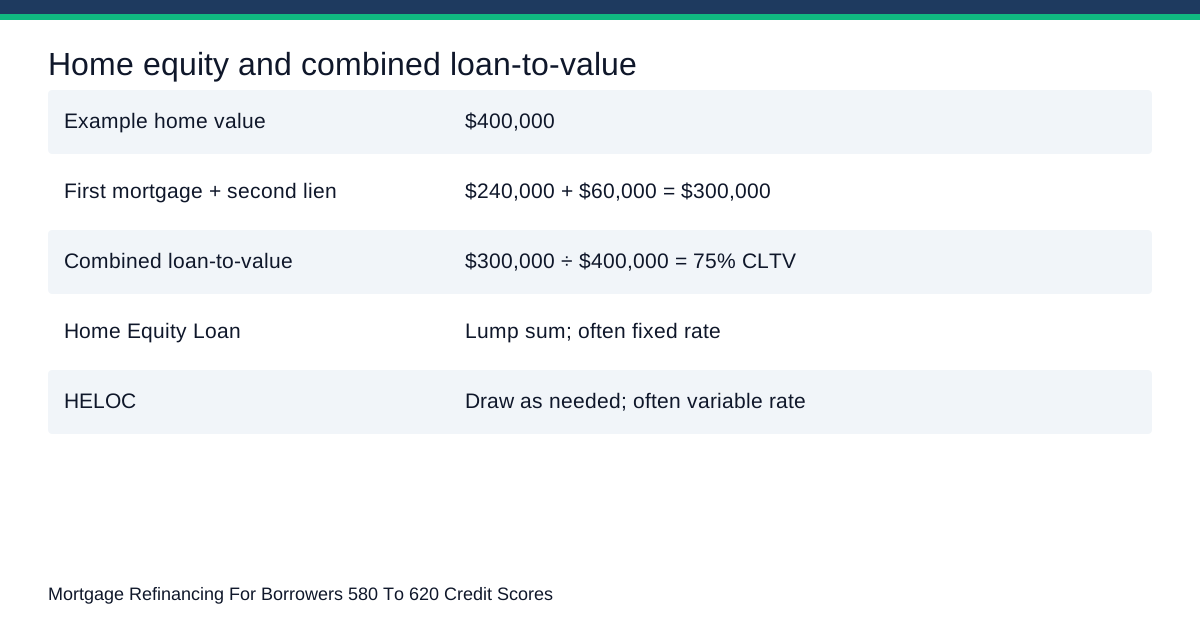
The loan-to-value ratio (LTV) is how lenders measure your equity. This ratio compares your loan amount to your home's current appraised value. If your home is worth $300,000 and you owe $240,000, your LTV is 80%, meaning you have 20% equity. Most lenders cap LTVs at 80-90% for borrowers with 600 credit scores, with better rates available at 80% LTV or lower.
Minimum Equity Requirements by Loan Type
Different refinance programs have varying equity requirements for borrowers in the 580-620 credit score range:
Conventional Refinance
Conventional loans typically require 20-25% equity (75-80% maximum LTV) for borrowers with 600 credit scores. Some lenders may approve loans up to 90% LTV, but you'll face significantly higher interest rates and mandatory private mortgage insurance (PMI). Expect PMI costs ranging from $150-400 monthly on a $250,000 loan amount if your LTV exceeds 80%.
FHA Refinance
FHA streamline refinance programs are more forgiving, accepting borrowers with as little as 10-15% equity (85-90% LTV). However, you must already have an FHA loan to use the streamline option. FHA cash-out refinances, which allow you to tap your equity, typically require 20% equity remaining after the refinance. FHA mortgage insurance premiums cost 0.55-0.85% annually, adding $115-177 monthly on a $250,000 loan.
Expert Tip
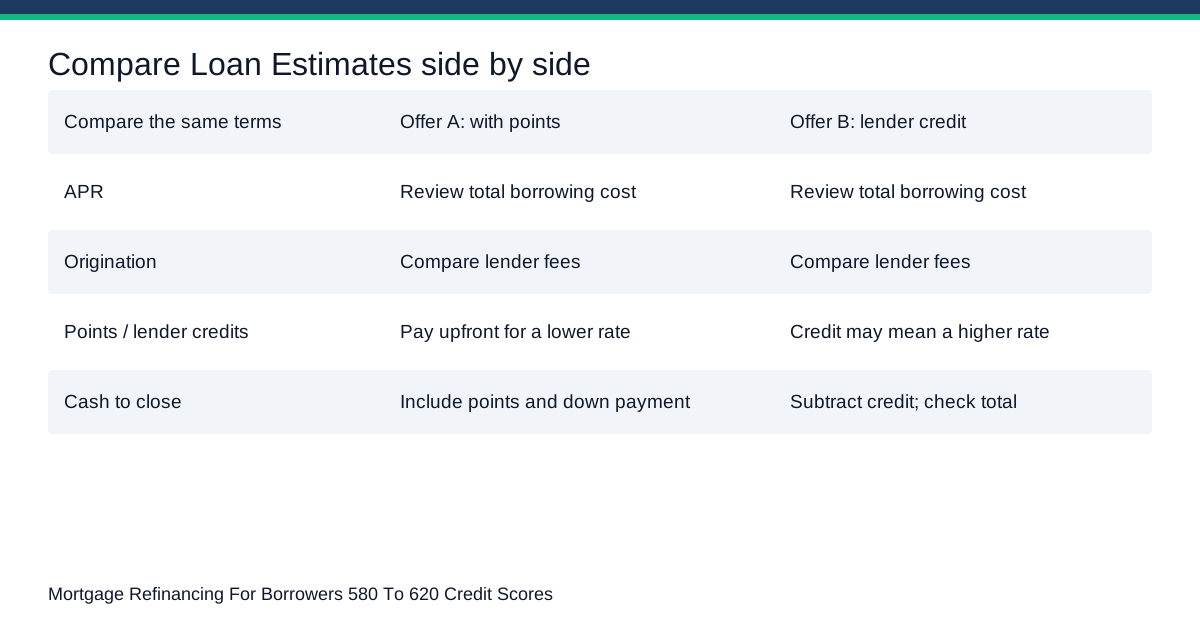
Compare Loan Estimates for the same loan type and term. Include closing costs when calculating whether refinancing saves money.
VA Refinance
If you're a qualified veteran or active service member with a 600 credit score, VA Interest Rate Reduction Refinance Loans (IRRRLs) have no specific equity requirement, though you cannot take cash out. VA cash-out refinances generally allow up to 90% LTV, meaning you need at least 10% equity. The VA funding fee ranges from 2.15-3.3% of the loan amount for refinances.
USDA Refinance
USDA streamline refinances have no equity requirement for existing USDA borrowers, but cash-out options are extremely limited. These loans serve rural and suburban homeowners, with no mortgage insurance if you maintain your streamline status.
How to Calculate Your Available Equity
Before applying for refinancing with a 600 credit score, calculate your current equity position:
- Determine your home's current market value: Research recent comparable home sales in your neighborhood or obtain a professional appraisal estimate ($400-600 in 2026)
- Find your current mortgage balance: Check your latest mortgage statement for the principal balance
- Calculate your equity percentage: Subtract your mortgage balance from your home value, then divide by the home value and multiply by 100
- Current home value: $350,000
- Current mortgage balance: $280,000
- Equity amount: $70,000
- Equity percentage: 20%
- Current LTV: 80%
Cost Comparison: Refinancing With Different Equity Levels
Understanding how your equity position affects your refinancing costs helps you make informed decisions:
| Equity Level | LTV Ratio | Est. Rate (600 Score) | PMI Required | Monthly Cost ($250K Loan) | Closing Costs |
|---|---|---|---|---|---|
| 10% equity | 90% LTV | 7.875-8.500% | Yes | $2,175-2,325 | $6,500-9,500 |
| 15% equity | 85% LTV | 7.625-8.250% | Yes | $2,075-2,225 | $6,000-9,000 |
| 20% equity | 80% LTV | 7.375-7.875% | No | $1,775-1,925 | $5,500-8,500 |
| 25% equity | 75% LTV | 7.125-7.625% | No | $1,725-1,850 | $5,500-8,000 |
| 30%+ equity | 70% LTV | 6.875-7.375% | No | $1,650-1,775 | $5,000-7,500 |
Rates and costs reflect 2026 national averages for 30-year fixed mortgages with 600 credit scores
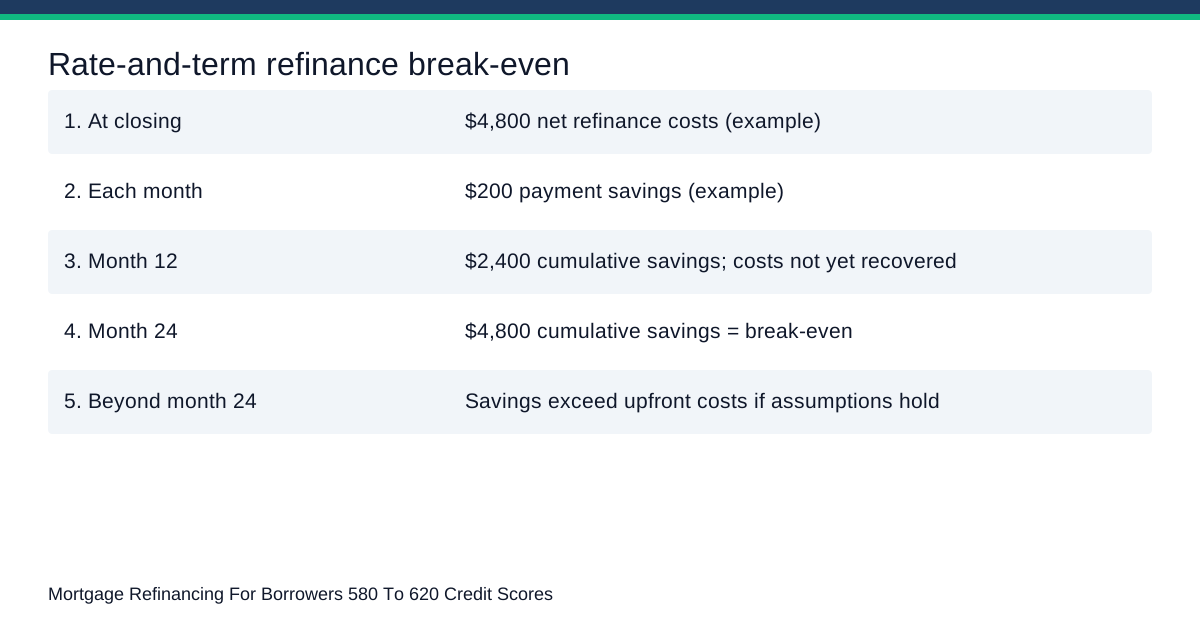
As this comparison shows, every 5% of additional equity can reduce your interest rate by 0.25-0.375%, saving $50-150 monthly. Over a 30-year loan term, the difference between 20% and 30% equity could save you $18,000-54,000 in interest.
Steps to Refinance Successfully With Limited Equity
When your credit score sits at 600 and you have minimal equity, follow this strategic approach:
Step 1: Improve Your Credit Score Before Applying Even a 20-40 point increase can dramatically improve your options. Pay down credit card balances below 30% utilization, dispute credit report errors, and make all payments on time for at least 3-6 months before applying.
Step 2: Shop Multiple Lenders Different lenders have varying risk appetites and specialized programs. Apply with at least 3-5 lenders, including credit unions, online lenders, and traditional banks. Rate differences of 0.5-1.0% are common for the same borrower profile.
Step 3: Get a Professional Appraisal Your home may have appreciated more than you realize. In 2026, many markets continue experiencing value increases. A professional appraisal ($450-650) might reveal 5-10% more equity than you calculated, opening doors to better loan programs.
Step 4: Consider Waiting to Build More Equity If you're borderline on equity requirements, waiting 12-18 months while making extra principal payments could substantially improve your position. An additional $500 monthly toward principal adds $6,000-9,000 in equity annually.
Step 5: Prepare Strong Documentation Compensating factors help offset lower credit scores. Provide proof of stable employment, consistent income, cash reserves covering 6+ months of payments, and explanation letters for past credit issues.
Step 6: Evaluate Cash-In Refinancing If you have savings available, bringing cash to closing can increase your equity position instantly. Contributing $10,000-30,000 to reduce your LTV from 85% to 75-80% unlocks significantly better rates that may recover your investment within 2-3 years through lower payments.
Red Flags That May Prevent Refinancing Approval
Even with adequate equity, certain factors disqualify borrowers with 600 credit scores:
Recent late mortgage payments: Most lenders require 12 months of on-time mortgage payments. Even one 30-day late payment in the past year can trigger automatic denial.
High debt-to-income ratios: Lenders typically cap DTI at 43-50% for subprime borrowers. Calculate your total monthly debt payments (including the new mortgage) divided by gross monthly income. If this exceeds 45%, reduce other debts before applying.
Recent bankruptcy or foreclosure: Chapter 7 bankruptcy requires 4 years for FHA and 7 years for conventional loans. Foreclosures require 3 years (FHA) or 7 years (conventional) before refinancing eligibility.
Unstable employment: Lenders want to see 2+ years in the same field or with the same employer. Job-hopping or recent career changes raise concerns about income stability.
Property value decline: If your home has lost significant value since purchase, you may have less equity than anticipated. Markets experiencing 10-20% declines leave many borrowers underwater or with insufficient equity to refinance.
Alternative Options When Equity Falls Short
If you don't meet equity requirements for traditional refinancing with your 600 credit score, consider these alternatives:
Loan Modification Programs
Contact your current lender about modification programs that adjust your loan terms without refinancing. These programs often waive equity requirements and credit score minimums for borrowers experiencing hardship.
Piggyback Second Mortgages
Some lenders offer second-position loans or HELOCs that don't require refinancing your first mortgage. Rates are higher (9-14% in 2026 for 600 credit scores), but you avoid refinancing closing costs and maintain your existing first mortgage rate if favorable.
Credit Score Improvement Strategy
Delaying your refinance 6-12 months while actively improving your credit score to 640-660 dramatically expands your options and reduces equity requirements. Many borrowers achieve 40-60 point increases through focused credit repair strategies.
Paying Down Principal Aggressively
Make bi-weekly payments instead of monthly, or add extra principal payments ranging from $200-500 monthly. This builds equity faster while demonstrating payment reliability to future lenders.
Frequently Asked Questions
Yes, but your options are limited. FHA refinances may accept 10-15% equity with a 600 credit score, though you'll pay higher interest rates (typically 7.75-8.5% in 2026) and mandatory mortgage insurance. Conventional lenders rarely approve loans above 90% LTV for borrowers with 600 credit scores. Expect to provide extensive documentation and possibly a larger cash reserve requirement.
What credit score is needed to refinance with only 10% equity?
To refinance with just 10% equity, most lenders require credit scores of 680 or higher for conventional loans. FHA programs are more flexible, accepting scores as low as 580 with 10% equity, though rates become prohibitively expensive below 620. VA loans offer the most flexibility for qualified veterans, allowing 10% equity with credit scores in the 580-620 range at reasonable rates.
How much does PMI cost on a refinance with 600 credit score?
Private mortgage insurance for borrowers with 600 credit scores and less than 20% equity typically costs 0.75-1.5% of the loan amount annually. On a $250,000 loan, expect $155-310 monthly. FHA mortgage insurance premiums cost 0.55-0.85% annually regardless of credit score, or $115-177 monthly on the same loan amount. You can eliminate PMI once your equity reaches 20-22% through payments or appreciation.
Does home equity matter more than credit score for refinancing?
Both factors are crucial, but they serve different purposes. Equity protects the lender's investment if you default, while your credit score predicts the likelihood of default. With a 600 credit score, having 25-30% equity significantly improves approval odds and rate offerings compared to having only 10-15% equity. However, neither factor alone guarantees approval—lenders evaluate your complete financial profile including income stability, debt ratios, and payment history.
How long does it take to refinance with 600 credit score and minimal equity?
The refinance process typically takes 30-60 days from application to closing for borrowers with 600 credit scores. Expect additional time if your equity position is borderline, as lenders may require second appraisals or additional documentation. Manual underwriting (common for subprime borrowers) adds 1-2 weeks. Start the process 90 days before you need the refinance completed to account for potential delays or documentation requests.
Take the Next Step Toward Refinancing Your Mortgage
Understanding how much equity needed to refinance with 600 credit score is just the beginning of your refinancing journey. While 20% equity represents the typical minimum threshold, your specific situation—including loan type, lender requirements, and compensating factors—determines your actual eligibility and costs.
The refinancing landscape changes constantly, with lenders adjusting their equity requirements and rate offerings based on market conditions. What's available today may differ in 30-60 days, making it essential to explore your options now rather than waiting.
Our network of specialized lenders works specifically with borrowers in the 580-620 credit score range who have limited equity. We'll match you with multiple lenders simultaneously, comparing equity requirements, interest rates, and program options to find the best refinancing solution for your situation.
Request your free, no-obligation refinancing consultation today. Complete our simple 2-minute form to receive personalized rate quotes from lenders who specialize in working with 600 credit score borrowers. There's no impact to your credit score for the initial consultation, and you'll receive specific information about equity requirements for your property and financial situation. Take control of your mortgage costs and discover how much you could save through refinancing—even with limited equity and a 600 credit score.
Frequently Asked Questions
What is the minimum equity needed for a conventional refinance with a 600 credit score?
For conventional refinancing with a 600 credit score, lenders typically require at least 20% equity (80% LTV). Some may allow up to 90% LTV but with higher interest rates and mandatory private mortgage insurance (PMI).
Can I refinance with a 600 credit score and only 10% equity?
Yes, if you have an FHA loan, an FHA streamline refinance may accept 10-15% equity. For conventional loans, 10% equity is generally not enough unless you qualify for special programs. VA cash-out refinances may allow up to 90% LTV.
How does loan-to-value ratio affect refinancing with a 600 credit score?
LTV ratio measures your loan amount against home value. A lower LTV (more equity) reduces lender risk. With a 600 credit score, keeping LTV at 80% or lower improves approval odds and interest rates. Higher LTVs may require PMI or higher rates.
What are the equity requirements for an FHA cash-out refinance with a 600 credit score?
For an FHA cash-out refinance with a 600 credit score, you typically need at least 20% equity remaining after the refinance. This means your LTV cannot exceed 80%. FHA mortgage insurance is also required.
Key Takeaways
- Understanding your options for how much equity needed to refinance with 600 credit score is the first step
- Getting pre-qualified helps you understand your real options