Compare Live Mortgage & Home Equity Rates
Compare current APRs, points, fees, and estimated monthly payments from participating lenders below.
Mortgage rates
Comparing Hard Money vs Traditional Refinance for Bad Credit
Quick Answer: When comparing hard money vs traditional refinance for bad credit, traditional options like FHA loans offer lower rates and longer terms but require credit scores of 580 or higher. Hard money loans focus on property equity, provide faster approval, and have more flexible credit requirements, but come with higher costs. Your choice depends on your need for speed versus long-term affordability.
If you're exploring mortgage refinancing options with a credit score between 580 and 620, understanding your choices is critical to making the right financial decision. When comparing hard money vs traditional refinance for bad credit, you'll discover two fundamentally different approaches to accessing home equity or lowering your monthly payments. Traditional refinancing through conventional lenders typically offers lower interest rates and longer terms but comes with strict credit requirements that may disqualify borrowers in your credit range. Hard money loans, backed by private lenders who focus primarily on your property's equity rather than your credit history, provide faster approval and more flexible qualification criteria—but at significantly higher costs. The right choice depends on your immediate financial needs, the equity you've built in your home, your ability to improve your credit score within 12-24 months, and whether you need quick access to funds or are focused on long-term affordability.
Understanding Traditional Refinance Options for 580-620 Credit Scores
Traditional refinancing through banks, credit unions, and mortgage companies remains possible even with bad credit, though your options become more limited compared to borrowers with excellent credit.
FHA Streamline and Standard FHA Refinancing
The Federal Housing Administration (FHA) offers the most accessible traditional refinancing pathway for borrowers with credit scores in the 580-620 range. FHA streamline refinancing requires a minimum credit score of 580 and is available only to homeowners with existing FHA loans. This option eliminates the need for a new appraisal in many cases and reduces documentation requirements significantly.
Standard FHA cash-out refinancing allows you to tap into your home equity while refinancing your existing mortgage. With a 580 credit score, you can qualify with as little as 3.5% equity remaining after the refinance. Expect interest rates ranging from 6.5% to 8.5% in 2026, depending on market conditions and your specific credit profile.
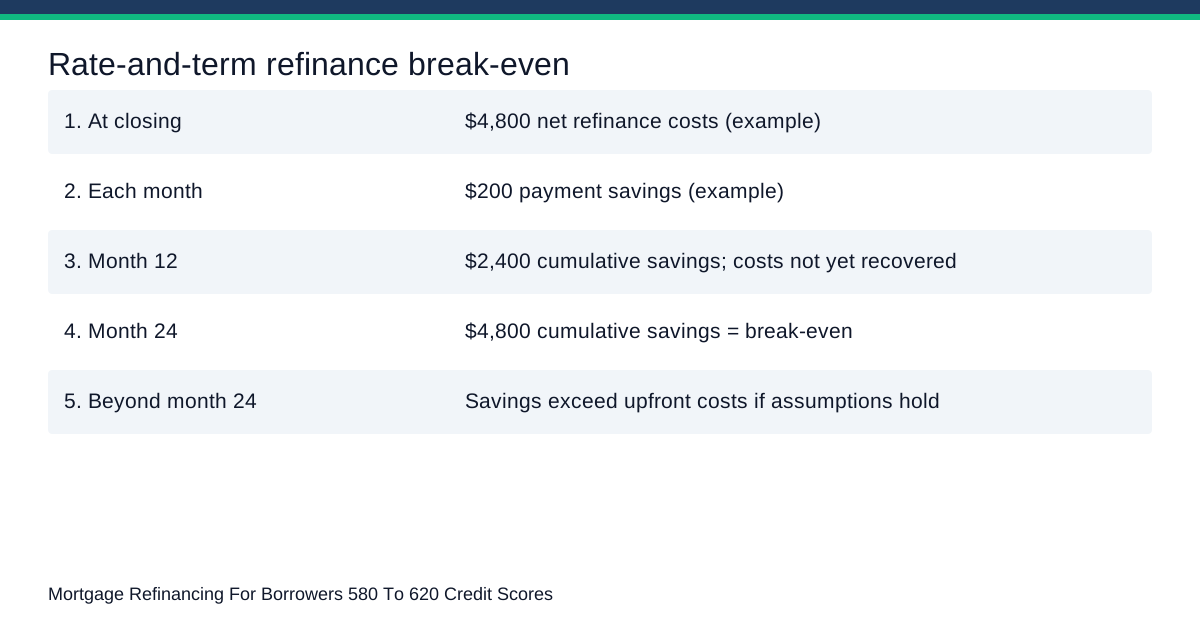
Closing costs for FHA refinancing typically range from $3,500 to $7,000 on a $200,000 loan, including the mandatory upfront mortgage insurance premium of 1.75% of the loan amount.
VA Loan Refinancing for Eligible Veterans
Military veterans, active service members, and eligible surviving spouses can access VA Interest Rate Reduction Refinance Loans (IRRRL) or VA cash-out refinancing with more lenient credit requirements. Many VA-approved lenders will work with borrowers in the 580-620 credit score range, particularly for IRRRL programs that don't require a new appraisal.
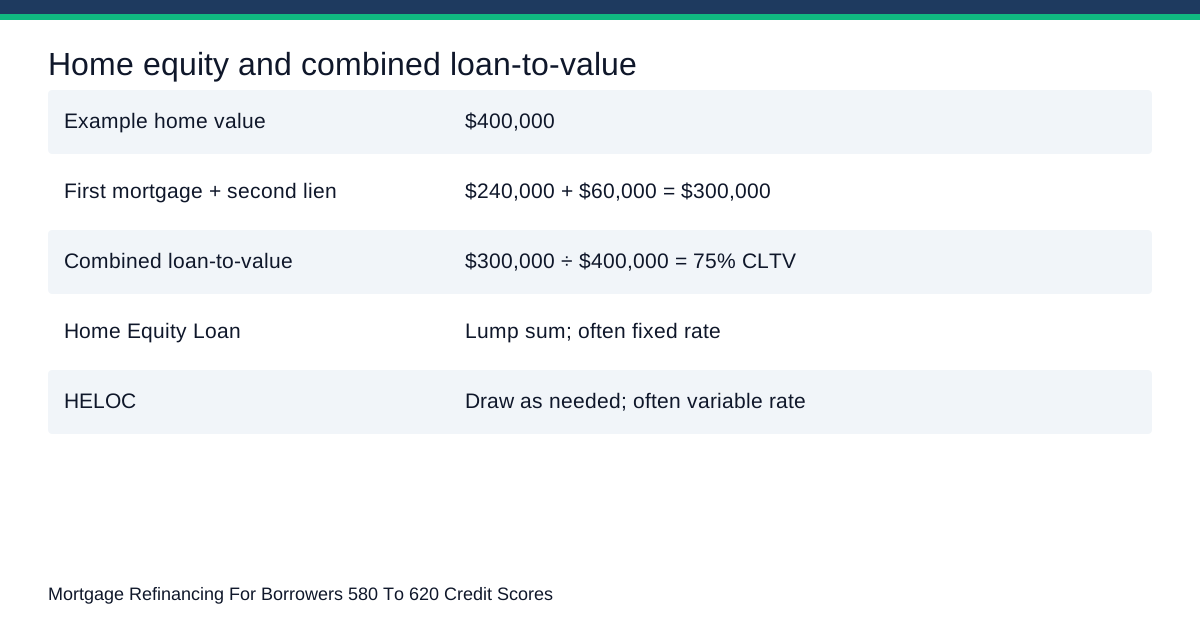
VA refinancing typically offers rates 0.25% to 0.75% lower than comparable FHA products, with closing costs between $2,500 and $6,000 on average.
Conventional Refinancing Challenges
Conventional refinancing through Fannie Mae or Freddie Mac becomes extremely difficult with credit scores below 620. The few lenders who will consider applications in this range typically require:
Expert Tip
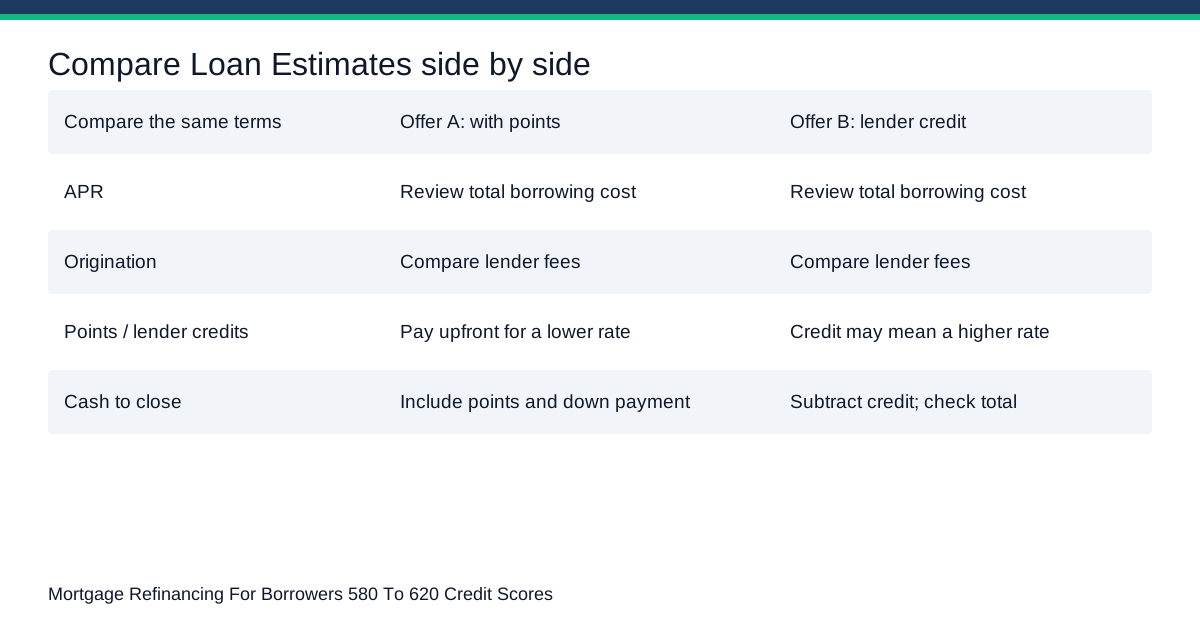
Compare Loan Estimates for the same loan type and term. Include closing costs when calculating whether refinancing saves money.
- Minimum 30% equity in the property
- Debt-to-income ratios below 36%
- Flawless payment history for the past 12 months
- Interest rates 2-3% higher than prime borrowers pay
- Closing costs between $4,000 and $8,500
What Makes Hard Money Refinancing Different
Hard money loans represent a completely different financing approach, offered by private investors and specialized lending companies rather than traditional financial institutions.
Asset-Based Lending Philosophy
Hard money lenders focus primarily on the loan-to-value (LTV) ratio of your property rather than your credit score. If you have 35-40% equity in your home, many hard money lenders will approve your refinancing application regardless of your credit history, recent bankruptcy, or even ongoing foreclosure proceedings.
This asset-based approach means the lender's primary concern is whether they can recoup their investment by selling your property if you default. Your credit score, while not irrelevant, becomes a secondary consideration.
Speed and Flexibility Advantages
Hard money refinancing can close in as little as 7-14 days compared to 30-60 days for traditional refinancing. This speed proves invaluable when you're facing:
- Imminent foreclosure proceedings
- Time-sensitive business opportunities requiring capital
- Medical emergencies or other urgent financial needs
- Property tax liens that must be satisfied quickly
The Cost Premium
The primary drawback of hard money refinancing is cost. Expect to pay:
- Interest rates between 9.5% and 14% annually
- Origination fees (points) of 2-5% of the loan amount
- Higher closing costs of $5,000 to $12,000 on a $200,000 loan
- Prepayment penalties in some cases
- Loan terms typically limited to 12-36 months
Direct Cost Comparison: Hard Money vs Traditional Refinance
| Cost Factor | Traditional Refinance (FHA) | Hard Money Refinance |
|---|---|---|
| Credit Score Minimum | 580-600 | No specific minimum (LTV-focused) |
| Interest Rate Range | 6.5% - 8.5% | 9.5% - 14% |
| Origination Points | 0.5% - 1% | 2% - 5% |
| Closing Costs ($200K loan) | $3,500 - $7,000 | $5,000 - $12,000 |
| Maximum LTV | 96.5% (FHA) | 60% - 70% |
| Approval Timeline | 30-60 days | 7-14 days |
| Typical Loan Term | 15-30 years | 12-36 months |
| Monthly Payment ($200K, 30yr) | $1,350 - $1,550 | $1,750 - $2,350 (interest-only common) |
| Total Interest (3 years) | $36,000 - $46,000 | $57,000 - $84,000 |
| Property Condition Requirements | Must meet HUD standards | Flexible, as-is acceptable |
When Traditional Refinancing Makes More Sense
Traditional refinancing through FHA, VA, or conventional channels should be your first choice when:
You have time to complete the process. If you're not facing immediate financial pressure or time constraints, the 45-60 day timeline for traditional refinancing allows you to secure significantly lower interest rates that save tens of thousands over the life of the loan.
You plan to stay in your home long-term. Traditional refinancing with 15-30 year terms makes sense when you intend to remain in the property for at least 3-5 more years, allowing you to recoup closing costs through monthly savings.
Your credit score is improving. If you're at 600-620 and actively working to improve your credit, traditional refinancing gives you the opportunity to secure better rates now and potentially refinance again in 2-3 years when you reach the 680+ range.
You need to access moderate equity. FHA cash-out refinancing allows you to borrow up to 80% of your home's value with a 580+ credit score, providing access to equity without the extreme costs of hard money loans.
Your income documentation is straightforward. Traditional lenders require comprehensive income verification through W-2s, tax returns, and pay stubs. If you're a salaried employee with consistent income, you can easily satisfy these requirements.
When Hard Money Refinancing Becomes Necessary
Hard money refinancing, despite its higher costs, represents the better choice in specific circumstances:
Foreclosure prevention with immediate deadlines. When you're weeks away from a foreclosure sale and need to satisfy a default quickly, the 7-14 day approval timeline of hard money loans can save your home when traditional refinancing simply can't close in time.
Recent credit events that disqualify you temporarily. If you've experienced bankruptcy, foreclosure, or short sale within the past 2-3 years, you may not qualify for traditional refinancing regardless of your current credit score. Hard money lenders look past these events if you have sufficient equity.
Self-employment or non-traditional income. Business owners, commission-based earners, and those with complex income structures often struggle to satisfy traditional lender documentation requirements. Hard money lenders care primarily about equity, making income verification much simpler.
Property condition issues. If your home needs significant repairs, lacks proper permits, or doesn't meet HUD standards for FHA financing, hard money lenders will often refinance based on the after-repair value (ARV) rather than current condition.
Bridge financing strategy. Many borrowers use hard money refinancing as a 12-24 month bridge while they repair their credit, stabilize their income, or complete property improvements. Once positioned properly, they refinance into traditional financing at lower rates.
The Credit Repair Bridge Strategy
The most sophisticated approach to refinancing with bad credit involves using hard money as a temporary solution while positioning yourself for traditional refinancing.
Step-by-Step Bridge Approach
Months 1-3: Secure Hard Money Refinancing
- Identify private lenders specializing in bad credit refinancing
- Verify you have at least 35-40% equity to qualify
- Close on hard money loan to address immediate financial needs
- Ensure loan term is at least 18-24 months to allow credit improvement time
- Make every hard money payment on time (most critical factor)
- Pay down credit card balances below 30% of limits
- Dispute errors on all three credit bureaus
- Add positive payment history through secured credit cards if needed
- Avoid new credit inquiries or accounts
- Monitor credit scores monthly (target 640+ for best conventional rates)
- Gather documentation: two years tax returns, recent pay stubs, bank statements
- Get property appraised to confirm equity position
- Research FHA, VA, or conventional refinancing options
- Apply with multiple lenders to compare rates
- Close on traditional refinancing with rates 4-6% lower than hard money
- Pay off hard money loan before prepayment penalties kick in
- Lock in 15-30 year fixed rate for long-term stability
Red Flags to Avoid in Hard Money Lending
The private lending space includes both legitimate lenders and predatory operators. Watch for these warning signs:
Excessive fees exceeding 6-7% of loan amount. While hard money is expensive, total upfront costs (points plus fees) shouldn't exceed 7% except in unusual circumstances. Lenders charging 10-15% upfront are likely predatory.
Balloon payments you cannot realistically meet. Some hard money loans require large balloon payments at term end. Ensure you have a realistic refinancing or sale strategy before accepting these terms.
Loans that reduce your equity below 30%. Hard money lenders typically keep LTV at 60-70%, leaving you with substantial equity. Lenders offering higher LTV ratios may be setting you up for foreclosure.
Lack of licensing or verifiable track record. Verify your lender is properly licensed in your state and has verifiable reviews or references from past clients.
Frequently Asked Questions
Yes, you can refinance with a 580 credit score through FHA streamline refinancing (if you have an existing FHA loan) or FHA cash-out refinancing. Expect interest rates between 6.5% and 8.5%, closing costs of $3,500-$7,000, and mandatory mortgage insurance that adds $150-$300 to your monthly payment. If traditional lenders decline you, hard money refinancing remains available with 35-40% equity, though rates jump to 9.5%-14% with higher upfront costs.
How much equity do I need for hard money refinancing with bad credit?
Most hard money lenders require 30-40% equity minimum, meaning they'll lend up to 60-70% of your home's current market value. With a home worth $300,000, you'd need $90,000-$120,000 in equity to qualify for a $180,000-$210,000 hard money refinance. Borrowers with credit scores in the 580-620 range typically need equity on the higher end of this spectrum.
Is comparing hard money vs traditional refinance for bad credit worth it if I'm planning to sell in two years?
If you're selling within two years, hard money refinancing rarely makes financial sense unless you're facing foreclosure or need emergency access to equity. The higher interest rates and upfront costs mean you'll pay $15,000-$25,000 more over two years compared to traditional refinancing on a $200,000 loan. Traditional refinancing becomes worthwhile if you'll recoup closing costs through lower payments before selling.
What credit score do I need to refinance from hard money to traditional mortgage?
You'll qualify for significantly better FHA refinancing rates once your credit score reaches 640+, though 580-620 scores remain eligible. Conventional refinancing typically requires 660-680+ for borrowers with recent credit problems. Most borrowers using the bridge strategy should target 640-660 within 18-24 months through consistent on-time payments and credit repair efforts.
Can I do a cash-out refinance with a 600 credit score?
Yes, FHA cash-out refinancing permits credit scores as low as 580, allowing you to borrow up to 80% of your home's value and take the difference in cash. With a $250,000 home and $150,000 existing mortgage, you could refinance for $200,000 and receive $50,000 cash (minus closing costs). Expect rates 0.5-1% higher than rate-and-term refinancing and mandatory mortgage insurance adding $175-$250 monthly.
Get Your Free Refinancing Analysis Today
Comparing hard money vs traditional refinance for bad credit requires understanding your specific financial situation, equity position, timeline, and goals. The difference between choosing the right option and the wrong one can mean $20,000-$50,000 in costs over just a few years.
Our network of specialized lenders works with borrowers in the 580-620 credit score range daily, offering both traditional FHA/VA refinancing and hard money solutions when appropriate. We'll analyze your situation at no cost and show you exactly what you qualify for, what it will cost, and which strategy saves you the most money.
Request your free, no-obligation refinancing consultation now. Complete our 60-second questionnaire to receive personalized rate quotes from multiple lenders specializing in bad credit refinancing. You'll discover your best options without affecting your credit score and speak with an experienced loan advisor who can answer your specific questions.
Don't let bad credit trap you in an unaffordable mortgage or prevent you from accessing your home's equity. Find out which refinancing path—traditional or hard money—makes the most sense for your situation today.
Frequently Asked Questions
What is the minimum credit score for an FHA refinance with bad credit?
For FHA streamline refinancing, the minimum credit score is typically 580. Standard FHA cash-out refinancing also requires a 580 credit score, with as little as 3.5% equity remaining after the refinance. These options are more accessible than conventional loans for borrowers with credit scores between 580 and 620.
How do hard money lenders evaluate borrowers with low credit scores?
Hard money lenders primarily focus on the property's equity rather than the borrower's credit history. They consider the loan-to-value ratio and the property's condition. Approval is faster and credit requirements are more flexible, but interest rates and fees are significantly higher than traditional loans.
Can I refinance with a credit score of 580 using a VA loan?
Yes, eligible veterans and service members can refinance with a credit score of 580 through VA Interest Rate Reduction Refinance Loans (IRRRL) or VA cash-out refinancing. Many VA-approved lenders work with borrowers in the 580-620 range, often with lower rates and closing costs than FHA loans.
What are the main drawbacks of hard money refinancing for bad credit?
Hard money loans come with higher interest rates, often 2-5% above traditional rates, and shorter repayment terms, typically 12-36 months. They also involve higher fees, including origination points. These loans are best for short-term needs or when quick access to funds is critical.
Key Takeaways
- Understanding your options for comparing hard money vs traditional refinance for bad credit is the first step
- Getting pre-qualified helps you understand your real options