Compare Live Mortgage & Home Equity Rates
Compare current APRs, points, fees, and estimated monthly payments from participating lenders below.
Mortgage rates
Average Interest Rate Refinance Borrowers With 610 Credit Score: Your 2026 Guide to Better Mortgage Terms
Quick Answer: Borrowers with a 610 credit score can typically expect refinance interest rates ranging from 7.25% to 9.50% APR in 2026, depending on factors like loan type, equity, and lender. While higher than prime rates, these rates may still offer savings compared to existing mortgages, especially through government-backed programs like FHA or VA loans.
If you're searching for information about the average interest rate refinance borrowers with 610 credit score can expect in 2026, you're likely wondering whether refinancing makes financial sense given your credit situation. Borrowers with a 610 credit score typically qualify for refinance rates ranging from 7.25% to 9.50% APR, depending on loan type, down payment equity, and lender requirements. While these rates sit higher than prime conventional offerings, they remain significantly lower than many alternative financing options and can still deliver substantial monthly payment reductions or cash-out opportunities for homeowners in the 580-620 credit range. Understanding your refinancing options with a subprime credit score is the first step toward potentially saving thousands of dollars over your loan's lifetime.
Understanding Credit Score Impact on Refinance Rates
Your credit score serves as one of the most influential factors lenders evaluate when determining your refinance interest rate. A 610 credit score falls within the "fair" credit range, positioning you above the minimum threshold for most government-backed refinance programs but below the "good" credit benchmark that unlocks preferential conventional rates.
Understanding average interest rate refinance borrowers with 610 credit score can help you compare your options and make a confident, informed decision.
Lenders view borrowers in the 580-620 range as higher-risk candidates, which translates directly to higher interest rates and more stringent approval requirements. However, this doesn't mean refinancing is out of reach or financially inadvisable. Many homeowners with similar credit profiles successfully refinance each year, securing rates that improve their financial position despite not qualifying for the lowest advertised rates.
The gap between rates offered to borrowers with 610 credit scores versus those with 740+ scores typically ranges from 1.5% to 3.0% in the current market. While this differential represents real cost, it's important to compare your potential new rate against your existing mortgage rate rather than against rates you don't qualify for. If your current mortgage carries an 8.5% rate and you can refinance to 7.75%, that reduction still generates meaningful savings regardless of what borrowers with excellent credit might obtain.
What Determines Your Specific Rate
Beyond your credit score, lenders consider several additional factors when pricing your refinance:
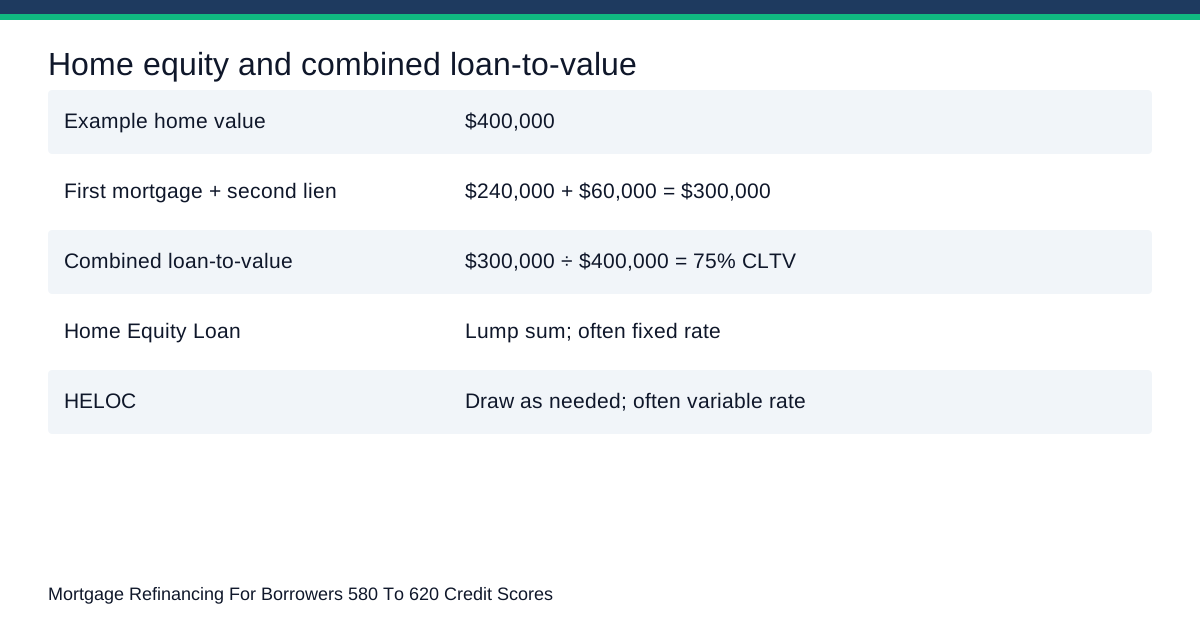
Loan-to-Value Ratio (LTV): The amount of equity in your home significantly impacts your rate. Borrowers with 20% or more equity typically receive better rates than those with minimal equity, even at the same credit score.
Debt-to-Income Ratio (DTI): Lenders calculate your total monthly debt obligations against your gross monthly income. DTI ratios below 43% generally qualify for standard programs, while higher ratios may require compensating factors or specialized programs.
Loan Type and Term: Government-backed FHA and VA loans often offer more competitive rates for borrowers with credit scores in the 610 range compared to conventional options. Similarly, 30-year terms typically carry slightly higher rates than 15-year mortgages.
Expert Tip
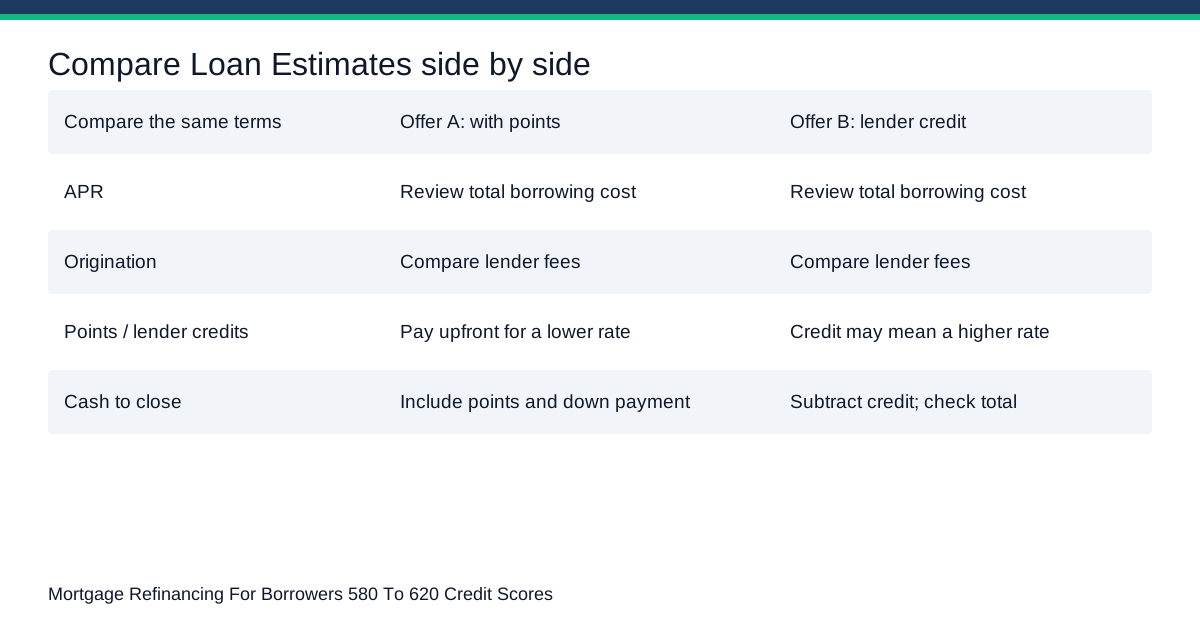
Compare Loan Estimates for the same loan type and term. Include closing costs when calculating whether refinancing saves money.
Employment History and Income Stability: Consistent employment and verifiable income can help offset credit score concerns in the underwriting process.
Refinance Program Options for 580-620 Credit Scores
Not all refinance programs treat credit scores identically. Understanding which programs best accommodate borrowers with fair credit helps you target the right lenders and set realistic expectations.
FHA Streamline Refinance
For homeowners with existing FHA loans, the FHA Streamline Refinance program offers one of the most accessible pathways to lower rates. This program requires minimal documentation, no appraisal in many cases, and accepts borrowers with credit scores as low as 580. The average interest rate refinance borrowers with 610 credit score receive through FHA Streamline programs in 2026 ranges from 7.25% to 8.50% APR.
The primary limitation is that you must already have an FHA loan to use this program, and you cannot take cash out beyond covering closing costs. However, the reduced documentation requirements and lenient credit standards make this an ideal first option for eligible borrowers.
FHA Cash-Out Refinance
If you need to access your home's equity or currently have a conventional loan, the FHA Cash-Out Refinance accepts credit scores as low as 580 (though many lenders impose 600-620 minimums as overlays). Rates for 610-score borrowers typically range from 7.50% to 9.00% APR in 2026.
This option requires more documentation than Streamline refinances, including full income verification, appraisal, and debt analysis. You'll need to maintain at least 20% equity after the cash-out, and you'll pay both upfront and annual mortgage insurance premiums.
VA Interest Rate Reduction Refinance Loan (IRRRL)
Veterans with existing VA loans can access the IRRRL program, which parallels FHA Streamline benefits with even more lenient requirements. VA doesn't impose a minimum credit score requirement, though individual lenders typically require scores of 580-620. Eligible veterans with 610 credit scores can often secure rates from 7.00% to 8.25% APR.
The VA funding fee for IRRRLs is significantly lower than for purchase loans or cash-out refinances, and this program requires minimal documentation and no appraisal in most cases.
Conventional Refinance Options
Conventional refinances become more accessible at 620+ credit scores, though some lenders accept 610 scores with compensating factors like high equity or low DTI. Expect rates from 8.00% to 9.50% APR for borrowers at the lower end of acceptable credit ranges.
Conventional refinances avoid mortgage insurance if you maintain 20% equity, which can offset the slightly higher interest rates compared to government programs. However, approval requirements are typically more stringent than FHA or VA options.
Cost Analysis: What to Expect When Refinancing
Understanding the complete cost picture helps you determine whether refinancing makes financial sense. Refinancing involves both upfront costs and long-term interest implications.
Typical Refinance Closing Costs in 2026
| Cost Category | Typical Range | Notes |
|---|---|---|
| Application/Processing Fee | $300 - $900 | Some lenders waive for competitive advantage |
| Origination Fee | 0.5% - 1.5% of loan amount | On $250,000 loan: $1,250 - $3,750 |
| Appraisal Fee | $450 - $750 | Waived on some streamline programs |
| Credit Report | $30 - $100 | Per borrower |
| Title Search & Insurance | $700 - $1,500 | Varies by loan amount and region |
| Recording Fees | $125 - $450 | Government charges |
| Prepaid Interest | Varies | Interest from closing to month-end |
| Escrow/Prepaid Items | Varies | Property taxes and insurance reserves |
| Total Estimated Closing Costs | $4,500 - $9,500 | On typical $250,000 refinance |
Many borrowers choose to roll closing costs into their new loan amount, avoiding upfront out-of-pocket expenses. This increases your loan balance but preserves liquidity. Alternatively, some lenders offer no-closing-cost refinances where they cover the fees in exchange for a slightly higher interest rate (typically 0.25% - 0.50% higher).
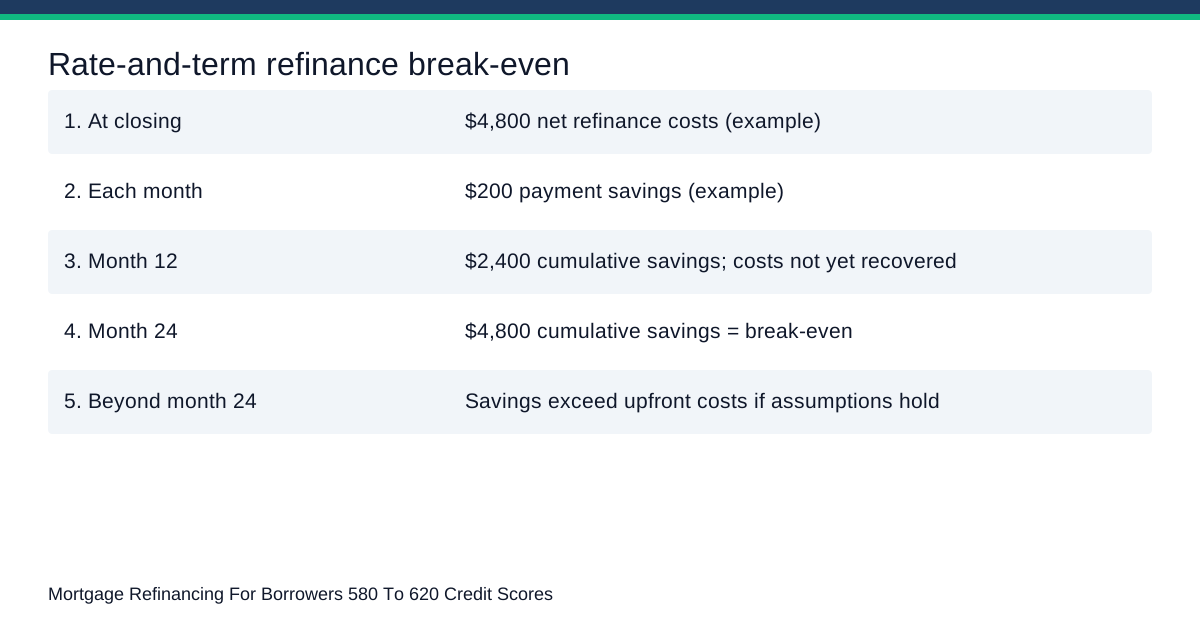
Break-Even Analysis
Calculate your break-even point by dividing total closing costs by your monthly payment reduction. For example:
- Current monthly payment (8.5% on $250,000): $1,922
- New monthly payment (7.5% on $250,000): $1,748
- Monthly savings: $174
- Closing costs: $6,000
- Break-even period: 34 months (approximately 3 years)
Step-by-Step Refinance Process for Fair Credit Borrowers
Understanding the refinance process helps you prepare documentation and set realistic timeline expectations.
- Check Your Credit Reports and Scores: Obtain reports from all three bureaus and dispute any errors. Even small score increases can improve your rate. Many borrowers discover that their middle score differs from what they expected, so verification is essential before applying.
- Calculate Your Home Equity: Determine your approximate loan-to-value ratio using recent comparable home sales in your area. Online valuation tools provide estimates, though lenders will require professional appraisals for most programs.
- Gather Financial Documentation: Assemble recent pay stubs (typically 30 days), W-2s or tax returns (two years), bank statements (two months), and documentation of any additional income sources. Government benefits, rental income, and investment returns may count toward qualifying income with proper documentation.
- Research and Compare Lenders: Not all lenders offer the same programs or rates for borrowers with 610 credit scores. Some specialize in subprime refinancing while others focus on prime conventional loans. Contact at least 3-5 lenders to compare actual rate quotes rather than advertised rates.
- Submit Formal Applications: Once you've identified promising lenders, submit formal applications within a 14-day window. Credit bureaus typically count multiple mortgage inquiries within this period as a single inquiry for scoring purposes, minimizing credit impact.
- Complete Underwriting Requirements: Respond promptly to underwriter requests for additional documentation or clarification. Common requests include letters of explanation for credit events, verification of large deposits, or updated bank statements.
- Lock Your Interest Rate: Once approved, decide whether to lock your rate or float. Rate locks typically last 30-60 days and protect you from rate increases during the closing process. With fair credit, most borrowers benefit from locking when receiving an acceptable rate rather than gambling on improvements.
- Complete Appraisal and Title Work: The lender orders an appraisal to verify property value and title search to confirm ownership and identify liens. Streamline programs often waive appraisals, accelerating the process.
- Perform Final Review: Several days before closing, review your Closing Disclosure detailing all costs and loan terms. Compare it against your Loan Estimate to identify any significant changes requiring explanation.
- Attend Closing and Fund: Sign final documents, typically at a title company or attorney's office. After a brief rescission period (typically three business days), your new loan funds and replaces your existing mortgage.
Strategies to Improve Your Rate and Terms
Even if you need to refinance immediately with a 610 credit score, several strategies can help you secure the best available terms or position you for better rates in the future.
Credit Improvement Tactics
If your timeline permits even 3-6 months of preparation, focused credit improvement can dramatically impact your rate. Paying down credit card balances below 30% utilization, disputing errors, becoming an authorized user on someone's excellent credit account, and allowing recent negative items to age all contribute to score increases.
Some borrowers in the high 610s can reach 620 with minor interventions, unlocking significantly better conventional loan terms. The rate differential between 610 and 640 credit scores often exceeds 0.50%, translating to substantial long-term savings.
Equity Accumulation
If your current LTV approaches 80% and waiting several months allows you to reach this threshold through regular payments or modest home value appreciation, you may eliminate private mortgage insurance requirements or qualify for better rate tiers. Some borrowers benefit from making additional principal payments specifically to cross LTV thresholds before refinancing.
Rate Buydown Consideration
Paying discount points—upfront fees equal to 1% of the loan amount per point—can reduce your interest rate by approximately 0.25% per point. For borrowers planning extended homeownership, buying down from 8.0% to 7.5% by paying two points ($5,000 on a $250,000 loan) may deliver better long-term value than accepting the higher rate with lower closing costs.
Calculate the break-even period on discount points the same way you calculate overall refinance break-even: divide the additional upfront cost by the monthly payment reduction from the lower rate.
Common Mistakes to Avoid
Borrowers with fair credit face unique challenges that make certain mistakes particularly costly.
Applying Without Rate Shopping: The first lender you contact may not offer the best terms for your credit profile. Specialized subprime lenders often beat large banks for borrowers in the 580-620 range. Always obtain multiple quotes.
Ignoring Loan-Level Price Adjustments: Credit score-based pricing adjustments significantly impact your rate. Understanding these adjustments helps you evaluate whether marginal credit improvement might drop you into a better pricing tier.
Overlooking Government Programs: Many borrowers with fair credit assume they can only access conventional loans with high rates, overlooking FHA, VA, or USDA programs specifically designed to accommodate lower credit scores with competitive rates.
Refinancing Too Frequently: Each refinance resets your amortization schedule. Borrowers who refinance every 2-3 years may pay less monthly but accumulate minimal equity and pay more total interest over time.
Withdrawing Excessive Cash: Cash-out refinancing to access equity for non-essential purposes increases your debt load, extends your payoff timeline, and increases long-term interest costs. Reserve cash-out refinancing for genuine value-creating purposes like home improvements that increase property value, debt consolidation that reduces total interest costs, or emergency needs.
Frequently Asked Questions
The absolute minimum credit score for most refinance programs is 580 for FHA and VA loans, though many lenders impose overlays requiring 600-620. Conventional refinances typically require 620 minimum, though some portfolio lenders accept lower scores with significant compensating factors like high equity or low DTI ratios. Borrowers below 580 have extremely limited options and typically must focus on credit repair before refinancing becomes accessible.
Can I refinance with a 610 credit score if I have recent late payments?
Recent late payments complicate but don't necessarily prevent refinancing with a 610 credit score. Most programs require no mortgage lates within 12 months for streamline refinances, though traditional refinances may accept one 30-day late payment beyond 12 months with a letter of explanation. Multiple recent lates, 60+ day lates, or patterns of delinquency significantly reduce approval odds. Focus on establishing 12+ months of perfect payment history before applying if recent lates appear on your report.
How much equity do I need to refinance with fair credit?
Minimum equity requirements vary by program. FHA cash-out refinances require maintaining 20% equity (80% LTV maximum). FHA and VA streamline programs typically allow up to 97.75% LTV since they're designed for rate reduction without equity extraction. Conventional refinances generally require 20% equity for borrowers with 610 credit scores, though some programs accept 10-15% equity with mortgage insurance. Higher equity positions generally unlock better rates at any credit score.
Will refinancing with a 610 credit score hurt my credit further?
The refinance process temporarily impacts your credit through hard inquiries (typically 5-10 points) and potentially through increased credit utilization if you roll closing costs into the loan. However, these impacts are temporary and minimal. Successful refinancing that improves your DTI ratio, maintains perfect payment history, and reduces your interest burden typically benefits your credit profile within 6-12 months. The initial inquiry impact recovers within months, and the long-term benefits of lower payments and faster equity accumulation outweigh short-term score fluctuations.
What documentation do lenders require for refinancing with a 610 credit score?
Standard documentation includes 30 days of pay stubs, two years of W-2s or tax returns for self-employed borrowers, two months of bank statements covering all accounts, government-issued photo ID, homeowners insurance declarations, most recent mortgage statement, and HOA contact information if applicable. Borrowers with 610 credit scores should expect additional scrutiny and potential requests for letters of explanation addressing credit events, employment gaps, or large deposits. Streamline refinances require significantly less documentation, often waiving income verification and appraisals entirely. Organized, complete documentation submissions accelerate the underwriting process and improve approval odds.
Take the Next Step Toward Lower Mortgage Payments
Understanding the average interest rate refinance borrowers with 610 credit score can expect represents your first step toward potentially substantial savings. While your credit score positions you outside the prime lending tier, numerous programs specifically accommodate borrowers in the 580-620 range with competitive rates that can still reduce your monthly obligations and long-term interest costs by thousands of dollars.
The refinance market remains competitive in 2026, with lenders actively seeking qualified borrowers across all credit spectrums. Your specific situation—including your current rate, home equity, employment stability, and financial goals—determines whether refinancing makes sense now or whether brief preparation might unlock even better terms.
Don't let assumptions about credit requirements prevent you from exploring your actual options. Lenders evaluate complete financial profiles, and strong compensating factors frequently offset fair credit scores in the underwriting process.
Ready to discover your actual refinance rate and potential savings? Request your free, no-obligation refinance consultation today. Our lending specialists work with multiple programs specifically designed for borrowers with credit scores in the 580-620 range, ensuring you receive accurate rate quotes and program recommendations tailored to your unique situation. Complete our simple online form or call now to connect with a refinance expert who can answer your specific questions and guide you through the application process. Your lower monthly payment may be
Frequently Asked Questions
What refinance programs are available for a 610 credit score?
Borrowers with a 610 credit score often qualify for FHA, VA, or USDA refinance programs, which have more flexible credit requirements than conventional loans. FHA loans typically accept scores as low as 580, while VA loans may have no minimum. Conventional loans may require higher scores or compensating factors like significant equity.
How does a 610 credit score affect refinance rates compared to higher scores?
A 610 credit score is considered fair, leading to rates about 1.5% to 3.0% higher than those for borrowers with scores above 740. This difference reflects the lender's perceived risk. However, refinancing can still be beneficial if your current rate is significantly higher than the new rate you qualify for.
Can I refinance with a 610 credit score if I have little home equity?
Yes, but you may face higher rates or need to use government-backed programs like FHA streamline or VA IRRRL, which may not require a new appraisal. Lenders typically prefer at least 20% equity for the best rates, but options exist for lower equity, especially with FHA loans that allow LTVs up to 97.75%.
What steps can I take to improve my chances of getting a lower refinance rate with a 610 credit score?
To potentially lower your rate, consider reducing your debt-to-income ratio, increasing your home equity through extra payments, or shopping among multiple lenders. Also, correcting any credit report errors and maintaining stable employment can help. Government-backed loans often offer more competitive rates for fair credit.
Key Takeaways
- Understanding your options for average interest rate refinance borrowers with 610 credit score is the first step
- Getting pre-qualified helps you understand your real options